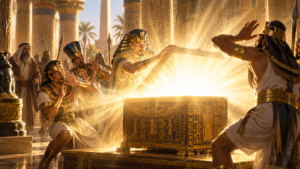
There’s an interesting dialogue in our parashah between God and Moshe. God implores Moshe, “Please, speak into the ears of the people, and let them borrow [from the Egyptians], each man from his friend and each woman from her friend, silver and gold vessels” (Exodus 11:2). Why did He need to beseech Moshe? After all, who turns down a monetary gift, especially from their oppressor?!
In fact, God had promised Abraham some 400 years earlier that his nation would be freed from slavery and leave with great wealth. God was now requesting of Moshe, as a favor of sorts, to ensure that His word would be carried out (Rashi, ibid.).
Yet if God is kind and caring enough to humble Himself to a mere mortal in order to fulfill His pledge, why couldn’t He simply have promised Abraham that He would make the Jewish people great and wealthy? Why was it ultimately for Abraham’s benefit that the great wealth be bestowed on his offspring only after their experience of hundreds of years of servitude?
King David, a very wealthy man, said, “I am poor and destitute” (Psalms 109:22). Despite his great wealth, and because he was so humble, he understood that even being king of Israel did not mean that his wealth was owed to him. To the contrary, it was precisely King David who experienced a challenging childhood before becoming a great king who understood that everything was purely an underserved gift from God.
King Solomon, the wisest of men, declared, “There isn’t a Tzaddik in the land who has done only good and not sinned” (Ecclesiastes 7:20). If even the great Tzaddikim are not complete in their service of God, what can be said of us? The goodness that we experience in our lives is not because God owes us, but because God loves us and seeks to give to us constantly.
“One who is little, is great” (Zohar, Chayey Sarah 122). In order to appreciate every goodness in our lives, we must first become humble. This is the attitude we exhibit as we chant the beautiful verses in Hallel: “He raises the poor from the dust, He lifts up the pauper from the dung hill, to seat them with princes” (I Samuel 2:8). Who is the one seated with the princes? He who feels as if he has been raised from the dust!
But the Zohar also says the opposite: “One who is great, is little” (ibid.). When we feel like more is owed to us, no matter how much wealth we accumulate, we won’t be satisfied. I once hired a plumber to fix my bathtub. He told me about a certain wealthy woman who subscribed to a home-improvement magazine and re-hired him literally every six months to replace her Jacuzzi and bathroom furnishings with the latest trendy models. What was wrong with her new bathroom? Nothing, but doesn’t she deserve the latest and greatest?
“Who is wealthy? He who rejoices in his lot” (Avot 4:1). Each and every one of us was born completely naked. We began life this way to realize that everything we are later blessed with is a gift, to be appreciated and utilized. Likewise, in order for the Jewish People to fully appreciate the material and spiritual wealth that God would give them, they had to begin their collective national experience as slaves and only later experience great salvation and wealth.
We cannot experience the joys of freedom at the Pesach Seder without also tasting the “poor man’s bread” (matzah) and the bitter herb (marror). A poor person is much better equipped to appreciate the simple things, like bread and water, as well as the bigger things in life. Sometimes life throws us lemons. These lemons are the opportunities to remember where we came from. They are precious points of reference that help us humble ourselves a bit so we can properly appreciate not only bread and water, but also our health, our families, our homes, our cars, and so much more!
Based on Likutey Halakhot, Purim 6