Five Sisters Who Revealed a Law of Torah
ADAPTED FROM HIS AUDIO SHIUR ON EIN YAAKOV LESSON 105B
The Unshakable Faith of Bnos Tzelofchad
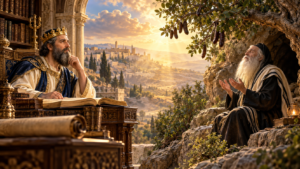
The story of Bnos Tzelofchad connects directly to the conclusion of Parshas Massei. Earlier, in Parshas Pinchas, the five daughters of Tzelofchad came before Moshe Rabbeinu and asked to inherit their father’s portion in Eretz Yisrael. In Parshas Massei, the leaders of the tribe of Menashe raised a second question: If these women married men from another tribe, their inherited land would eventually be transferred from Menashe to that tribe. Moshe Rabbeinu therefore ruled, according to the word of Hashem, that Bnos Tzelofchad should marry within their own tribe. The Torah concludes by telling us that they obeyed:
“As Hashem commanded Moshe, so did the daughters of Tzelofchad.”
Their story therefore brings together the central themes of these parshiyos: the division of Eretz Yisrael, the preservation of each tribe’s inheritance, obedience to the Torah, and an extraordinary love and longing for the Holy Land.
The Question of Inheritance
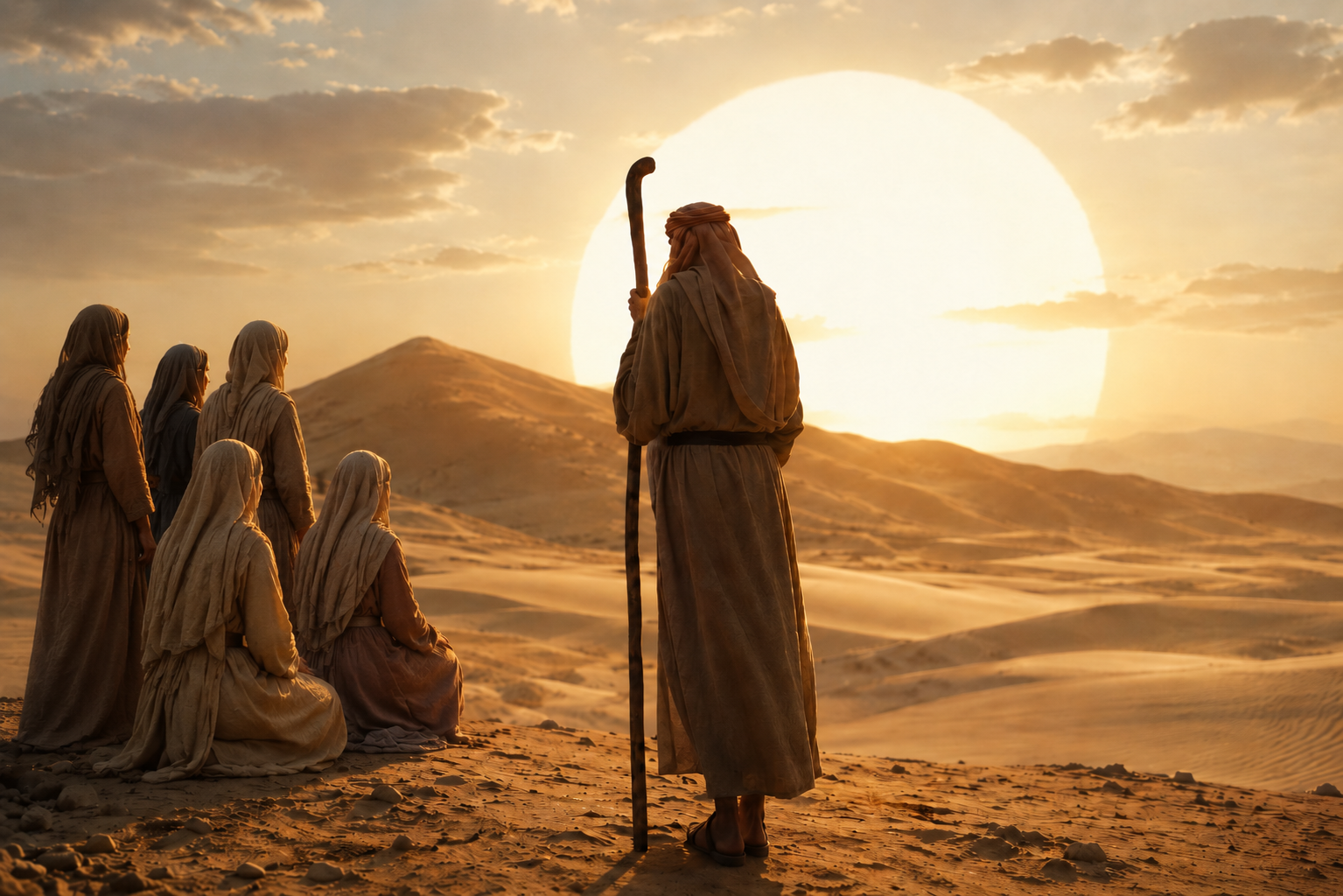
In dividing the Land of Israel among the tribes, everyone received his nachalah—his inheritance. The land was apportioned among the tribes so that every family within each tribe received a portion. The Torah’s laws of inheritance state that when a father passes away, his possessions and wealth are inherited directly by his sons. Provision is made for the wife and daughters so that their needs are taken care of, but the direct inheritance ordinarily passes to the sons. The question therefore arose: What happens when a man leaves no sons? Where does his inheritance go? It was at the end of the forty years in the desert. Moshe Rabbeinu had brought the Jewish people to the point of crossing the Jordan and entering Eretz Yisrael. He was preparing to bid them farewell and entrust their entry into the Land to Yehoshua. At that moment, five sisters came before Moshe Rabbeinu, the leader and judge of the Jewish people. They said that they had a problem upon which they wanted him to rule. These were the daughters of Tzelofchad: Machlah, Noah, Choglah, Milkah and Tirtzah. They said: “Our father died in the desert. He left no sons; he left only daughters. Why should the name of our father be removed from among his family because he had no son? Give us a possession among the brothers of our father.”Their father would have received a portion in Eretz Yisrael. Since he had left no sons, they wanted to know what would happen to his inheritance. Moshe Rabbeinu said, in effect, “Wait, and I will receive the answer from Hashem.” This was a law for which he would receive the answer directly from Hashem. Hashem replied that the daughters of Tzelofchad had spoken correctly. If a man died without leaving sons, his daughters were next in line to inherit. They would therefore receive the portion of land that their father was supposed to have received.
Who Was Tzelofchad?
The Gemara records different opinions concerning the identity of Tzelofchad. According to one major opinion, he was the mekoshesh eitzim, the man found gathering and carrying wood on Shabbos. The Torah relates that this man was brought before Moshe Rabbeinu. Since his punishment had not yet been stated, Moshe waited for the word of Hashem. Hashem then commanded that the man be put to death. This raises an obvious question. Bnos Tzelofchad came before Moshe and spoke openly of their father. They did not appear ashamed of him. Yet according to this opinion, he had apparently committed a most serious violation. The mefarshim and Midrashim explain that Tzelofchad was, in truth, a tzaddik. The Zohar HaKadosh describes him as pure. According to some explanations, his act was motivated by a desire to save the Jewish people from spiritual collapse. The incident took place shortly after the sin of the spies. The Jewish people had been told that the generation of the desert would not enter Eretz Yisrael but would die during the forty years of wandering. Some might have reasoned: “We are going to die anyhow. What purpose is there in continuing to observe the Torah? We received the Torah with the expectation that we would enter Eretz Yisrael, but now that this has been taken away from us, perhaps we are no longer obligated to live according to its laws.” Such thinking could have caused a complete spiritual disintegration. Tzelofchad saw this danger and decided to sacrifice himself in order to demonstrate that even after the decree, the Jewish people remained fully responsible for observing the mitzvos of the Torah. One explanation states that he carried the wood in such a manner that the witnesses believed he had violated Shabbos, although technically he had not carried the full forbidden distance continuously. He stopped in between, but did so in a manner that others could not detect. According to this explanation, he did not actually desecrate Shabbos. He allowed himself to be judged as though he had, so that the Jewish people would recognize the continued seriousness of Torah observance. The Zohar therefore describes his failing not as an actual desecration of Shabbos, but as an element of disrespect toward Heaven: People saw what appeared to be a Jew violating Shabbos, and this itself could create a chillul Hashem. Nevertheless, his intentions were to strengthen the Jewish people and prevent them from abandoning the Torah. This is only one of several explanations concerning Tzelofchad. But it helps us understand why his daughters were able to speak of him with dignity. They understood the purity of his intentions and the sacrifice he had made.
Why Did the Torah Wait for Their Question?
When the daughters of Tzelofchad asked Moshe Rabbeinu what happens when a father leaves no sons, Moshe said that he would bring their case before Hashem. Why did Moshe not already know the answer? Moshe had taught the entire Torah to the Jewish people: “Torah tzivah lanu Moshe—Moshe commanded us the Torah.” Why, at this point, did he hesitate? The Gemara explains that the Torah wished to give credit to Bnos Tzelofchad. Hashem arranged that this law of inheritance should be revealed through them. The law could have been written earlier. But had it already been stated, there would have been no need for them to approach Moshe. Hashem wanted this portion of Torah to be associated forever with these five righteous women. This teaches a very important principle: Something good is brought about through a worthy person. Hashem arranges that goodness, blessing and the revelation of Torah should come through those who are themselves good and righteous. Bnos Tzelofchad were chosen to reveal this law because they were tzidkaniyos. Their question was not motivated merely by a desire for property. Their deepest concern was that their father’s name should not disappear and that their family should have a permanent portion in Eretz Yisrael.
The Faith of the Women
The women of that generation displayed extraordinary purity and faith. The women did not participate in the worship of the golden calf. They also rejected the negative report of the spies. While the men of the generation cried and wished to return to Egypt, the women maintained complete faith in Hashem, Moshe Rabbeinu and the promise of Eretz Yisrael. The women were therefore not included in the decree that the generation of the desert would die before entering the Land. The Midrash teaches that if one wishes to learn true and unwavering faith, one should learn it from the righteous women. Their emunah could not easily be shaken. Bnos Tzelofchad embodied this faith. For forty years they lived in the desert, yet they never lost their longing for Eretz Yisrael. Before a single field had been divided, before the Land had been conquered, and while the Jewish people were still on the other side of the Jordan, they came forward to demand their family’s portion. They did not see Eretz Yisrael as a distant promise. To them, it was already a reality. Others had said, “Let us return to Egypt.” Bnos Tzelofchad said, in effect, “Give us our inheritance in the Land.” Their question revealed where their hearts truly were.
The Second Question in Parshas Massei
Hashem ruled that Bnos Tzelofchad should inherit their father’s portion. This appeared to solve the problem, but in Parshas Massei a second question arose. The leaders of Menashe came before Moshe and said that this might only be a temporary solution. Each tribe had been given a distinct portion of Eretz Yisrael, and that tribal inheritance was meant to remain intact. If the daughters of Tzelofchad married men from another tribe, their inherited property would ultimately become associated with their husbands’ tribe. Land belonging to Menashe would then be transferred to another tribe. Menashe’s portion would be diminished, while the portion of another tribe would be enlarged. Moshe Rabbeinu answered that their concern was correct. Bnos Tzelofchad were permitted to marry whomever they wished from the families of their father’s tribe. By marrying within Menashe, their inheritance would remain within the tribe. The Torah then tells us that they obeyed exactly as Hashem had commanded. This final statement is itself their praise. They had courageously approached Moshe when a Torah ruling was needed, but once the ruling was given, they submitted themselves completely to Hashem’s will. They possessed both qualities: the courage to ask and the humility to obey.
They Waited for the Proper Husbands
The Gemara teaches that Bnos Tzelofchad did not marry when they were young. They waited until they found husbands who were truly suitable for them. By the time the question of their inheritance arose, they were already approximately forty years old. They were not prepared to compromise merely in order to marry sooner. Their intentions were pure. They waited for men who were worthy, while remaining devoted to Hashem and to the future of their family in Eretz Yisrael. The Gemara describes their ability to have children afterward as miraculous, comparable in some respects to the miracle experienced by Yocheved, the mother of Moshe Rabbeinu. Tosafos notes that physical nature can change from one generation to another, and therefore physiological descriptions given in the Gemara are not necessarily applied identically in every later generation. The central point is that these women were tzidkaniyos. Their intentions were pure, and Hashem blessed them with the continuation of their families.
Their Eternal Lesson
Bnos Tzelofchad teach us several fundamental lessons. They teach us to love Eretz Yisrael—not merely as an abstract ideal, but as our inheritance and our destiny. They teach us that true faith does not disappear when life becomes difficult. The men of the generation heard the decree of the desert and became discouraged. Bnos Tzelofchad continued to believe in the promise of the Land. They teach us that a person may respectfully bring a sincere question before the Torah’s leaders. Their question became the vehicle through which an entire section of Torah was revealed. They teach us that something good is brought about through good people. Hashem gave them the eternal merit that the laws of inheritance should be revealed through them. They teach us to combine initiative with obedience. They stood courageously before Moshe Rabbeinu, yet when Hashem’s ruling was given, they followed it completely. And they teach us never to surrender to the feeling that it is too late. They waited many years, remained faithful to their values, and were ultimately blessed with families and with a permanent inheritance in Eretz Yisrael. This is why their story appropriately concludes the journeys recorded in Parshas Massei. The Jewish people had traveled through the desert, passed through trial after trial, and were now standing at the entrance to the Promised Land. Bnos Tzelofchad represented the faith that carried the Jewish people through all those journeys: a faith that never stopped believing, never stopped waiting and never stopped longing for Eretz Yisrael. May we be worthy to learn from their unshakable emunah, their purity of intention and their love for the Holy Land. May everything good that must be revealed in the world come through worthy people, and may we soon merit the complete inheritance of Eretz Yisrael, with the coming of Mashiach, במהרה בימינו אמן.
- 0 comment