Yehudah’s Rebuke

Yehudah Steps Back from the Blessing
Parshat Vayechi concludes Sefer Bereshit with Yaakov Avinu blessing his sons before his passing. Chazal teach that Yaakov Avinu did not truly die, yet the Torah describes a moment of transition in which he prepares his sons to stand on their own. Each blessing reveals not only future destiny but also a deep spiritual evaluation of character and mission.
The Torah presents the blessings in a specific order. Reuven, Shimon, and Levi are addressed first, and while Yaakov speaks to them as a father blessing his children, his words carry sharp rebuke. Reuven is faulted for acting impulsively and disturbing the resting place of the Shechinah. Shimon and Levi are reproached for their uncontrolled anger and for acting without consultation when they destroyed Shechem. Though these were great tzaddikim, Yaakov makes clear that their actions were driven by haste and intensity without restraint.
As Yehudah watches his older brothers being confronted so directly, he begins to withdraw. Rashi, citing Midrash Tanchuma, explains that Yehudah feared he too would be rebuked. Seeing the severity of Yaakov’s words, he assumed that his own past would now be called into account.
Yehudah’s Fear and the Incident of Tamar
What Yehudah feared most was not the sale of Yosef, but the episode of Tamar. This is striking. Yehudah was instrumental in Yosef’s sale, suggested selling him rather than killing him, and orchestrated the deception of Yaakov using Yosef’s bloodied garment. Yet Rashi tells us that Yehudah was not afraid of rebuke for that act. Instead, he feared Yaakov would confront him about Tamar.
The incident of Tamar is morally complex. Though certain halachic opinions at the time could technically permit such a relationship under the framework of yibum, it was nevertheless ethically problematic. Tamar descended from Shem, who held the status of a Kohen-like figure, and Yehudah himself judged her as the daughter of a Kohen when he believed she had acted immorally, sentencing her to be burned.
From Yehudah’s perspective, this episode carried deep shame. He believed he had engaged in an illicit act with a prostitute, only later discovering that it was his daughter-in-law acting to preserve the seed of the family. This was the incident that troubled him most as Yaakov prepared to speak.
“Yehudah, You Are Not Like Them”
Instead of rebuke, Yaakov calls Yehudah forward with words of warmth and affirmation. “Yehudah, ata yoducha achecha” — your brothers will acknowledge you. Rashi explains that Yaakov deliberately reassured Yehudah: “You are not like them.”
This distinction is critical. Reuven, Shimon, and Levi acted with good intentions, but their actions were driven by unchecked force. They acted prematurely, without consultation, and without the vessels needed to contain their intensity. Their failure was one of dochek et ha’sha’ah — pushing the moment before its time.
Yehudah’s situation was fundamentally different. His involvement with Tamar was not an act of impulsive aggression or unchecked zeal. Chazal teach that he was compelled by forces beyond himself. The Midrash and Zohar describe an angel guiding him, coercing him to engage in a relationship with a prostitute (really Tamar).
The Chamber of Exchanges and the Lineage of Mashiach
The episode of Yehudah and Tamar belongs to a different spiritual category entirely: the Chamber of Exchanges. Reb Noson explains that the most powerful redemptive souls must descend into morally complex and distorted situations in order to extract holiness trapped there.
Mashiach descends from a lineage that includes Ruth the Moabite and the tangled story of Yehudah and Tamar. This is not incidental. A redeemer who must reach lost souls cannot emerge from an untarnished, pristine lineage alone. He must carry what Chazal call a “kupat sheratzim” — a background that enables him to descend into broken places and lift others out.
If Mashiach were born only of flawless pedigree, he would lack the capacity to engage those trapped in confusion, exile, and spiritual collapse. The descent itself creates the ability to redeem.
Yehudah’s act, though painful and humiliating, was not a failure of restraint like those of his brothers. It was a divinely orchestrated descent necessary for the emergence of the soul of Mashiach. This is why Yaakov does not rebuke Yehudah — and why Yehudah becomes the bearer of kingship.
Upside-Down Lineage and the Mission of Mashiach
Reb Noson explains that Mashiach must emerge from an “upside-down” lineage. Here, the Torah presents that upside-downness in the starkest terms. Ruth descends from Moav, and Moav himself is born from Lot and his daughter. That alone is a lineage rooted in confusion and brokenness. Lot’s daughter names the child Moav—“from my father”—openly identifying the origin without shame.
Ruth becomes the ancestor of King David, and David becomes the root of Mashiach. Alongside that is the other foundational scandal: Yehudah and Tamar. Again the Torah builds the story in a way that highlights confusion—everything appears disordered, compromised, and swapped. But that is precisely the point. Mashiach must have a background connected to the Chamber of Exchanges, because the Chamber of Exchanges is the spiritual reality where things are not as they should be—where light and darkness, purity and impurity, holiness and confusion are interchanged.
The final redemption is not completed through Mashiach ben Yosef, though Mashiach ben Yosef plays a critical preparatory role. The seal of redemption—the chotemet—comes through Mashiach ben David. That is who we await. The Torah therefore reveals a lineage that contains the capacity to descend into the most upside-down places and still extract holiness.
The Chamber of Exchanges is experienced when a person feels swapped—when holiness feels blocked and distorted. Our hope is attachment to true tzaddikim who can enter these places and help pull souls back.
Why Yehudah Feared Tamar More Than Yosef
This returns us to the earlier question. Why was Yehudah afraid Yaakov would rebuke him for Tamar, but not afraid of rebuke for Yosef?
The brothers did indeed demote Yehudah after Yosef’s sale because they saw Yaakov’s anguish. They blamed Yehudah: we listened to you, and because of you our father is broken. Yet Yaakov himself had initiated Yosef’s journey. Yaakov told Yosef to go find his brothers in Dotan, knowing this was the first stage in the unfolding destiny of the Jewish people.
And Yosef later confirms the divine purpose: do not be sad that you sold me, because Hashem sent me ahead to sustain you in famine. Yosef’s descent to Egypt became the foundation of Yaakov’s survival and the beginning of the national story. Yosef’s role as Yosef HaTzaddik is precisely to enter the domain of the Chamber of Exchanges – i.e. Egypt – and maintain holiness there, then use that position to rescue others. Since this was ultimately for good, Yaakov had no hard feelings toward Yehudah about Yosef.
Tamar was different. The Tamar episode looked, on its surface, like pure shame: an illicit encounter, a prostitute, hidden identities, and a moral disaster. That was the piece Yehudah feared Yaakov would confront—because its entire appearance is the appearance of distortion and disgrace.
Gur Aryeh Yehudah and Two Acts of Rescue
Yaakov’s blessing continues with a verse that, as Rashi notes, contains both stories—Tamar and Yosef—hidden inside it.
“Gur Aryeh Yehudah”—Yehudah is likened to a lion cub and a lion. Rashi explains that this hints to two phases. There is a stage where Yehudah’s descendant acts as a “cub,” fighting under another king, and then a stage where he becomes the “lion,” the king himself.
Then comes the key phrase: “Miteref b’ni alita.” On the surface it sounds like devouring, like a lion’s prey. Rashi interprets it as Yaakov saying: from the devouring I suspected you of, you lifted yourself away.
Yosef
Yaakov suspected his sons when he believed Yosef had been torn apart and devoured—“tarof toraf Yosef.” Since Yehudah is compared to a lion, Yaakov hints: even though I suspected you were part of the “devouring,” you removed yourself from that outcome. You said, “Ma betza”—what do we gain by killing him? Yehudah prevented Yosef’s murder. Yosef was sold, and though that was a terrible act, Yosef remained alive and the divine plan continued to unfold through him.
Tamar
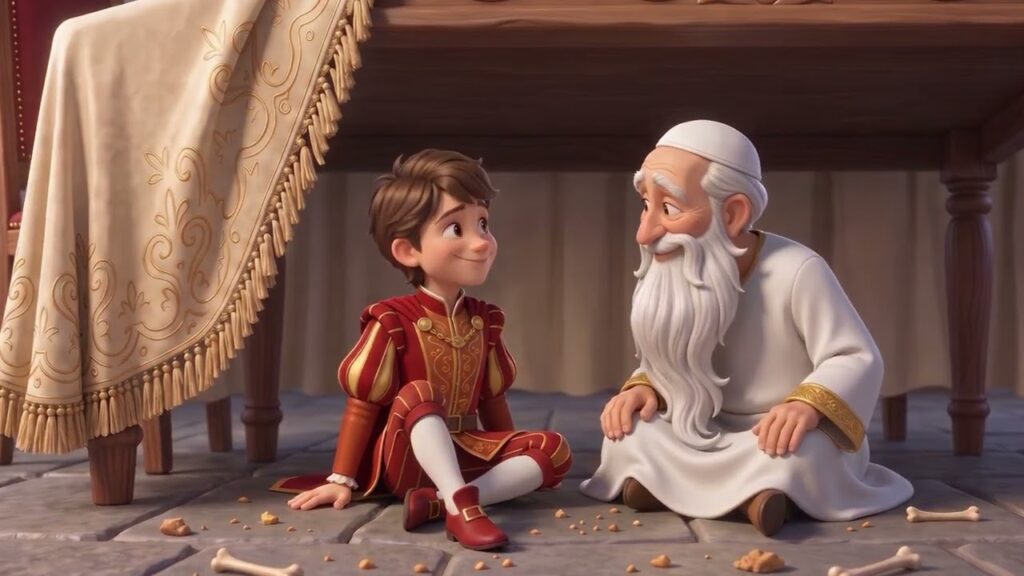
Rashi then applies the same phrase to Tamar. Tamar could have been killed. Yehudah, believing she had been unfaithful, judged her as the daughter of a Kohen (i.e. a descendant of Shem) and declared she should be burned. But Tamar, without humiliating Yehudah publicly, produced the collateral she had taken—his staff, his signet ring, and his garment—saying only: from the man to whom these belong, I am pregnant.
At that moment, Yehudah could have concealed himself. He could have delayed, demanded proof, or allowed Tamar to die while the matter was “investigated.” Instead, he admitted the truth: “Tzadkah mimeni.” He accepted shame for the sake of emet. That confession saved Tamar and saved Yehudah from the spiritual catastrophe of being responsible for innocent blood.
This is why Yaakov begins Yehudah’s blessing with “Yehudah ata yoducha achecha”—your brothers will acknowledge you, because you acknowledged the truth. Yehudah’s greatness here is not only kingship, it is inner truthfulness strong enough to endure humiliation.
The Chamber of Exchanges as the Preparation for Redemption
This brings the whole picture into focus. Yehudah was not like Reuven, Shimon, and Levi. Their failure was intensity without restraint. Yehudah’s story is the opposite. His path includes descending into a swapped, upside-down scenario—precisely because redemption requires that kind of descent.
The Yehudah and Tamar union is an entry into the Chamber of Exchanges, so that the soul-line of David, Shlomo, and eventually Mashiach will have a pedigree that contains brokenness. Not brokenness as an accident, but brokenness as a mission. It creates the capacity to reach those who are trapped, confused, and far—because Mashiach must be able to say, in the deepest sense: I understand this domain, and I can enter it and extract you.
The lineage runs through two core “upside-down” roots: Lot and his daughter leading to Moav and Ruth, and Yehudah with Tamar leading to Peretz and David. From there emerges the royal line. Royalty, by definition, rests on lineage—and yet this lineage is deliberately shaped to include the Chamber of Exchanges, so that the final redeemer can elevate those lost within it.
The Practical Lesson for Us
The message is not only historical. It speaks directly to the soul of a Jew living in exile and confusion. The Chamber of Exchanges is experienced when a person feels swapped—when light is taken and darkness is given, when purity is replaced with impurity, when holiness feels blocked and distorted.
Our hope, Reb Noson teaches, is attachment to true tzaddikim of this caliber—tzaddikim who can enter these places and help pull souls back. If they descend for the sake of extraction, then even when a person feels trapped in the worst swapping imaginable, there remains a path out.
Yehi ratzon that we should merit to take strength from Yehudah’s truth, to trust the mission even when life looks upside-down, and to attach ourselves to true tzaddikim who can guide us out of the Chamber of Exchanges and back into light, kedushah, and clarity, be’ezrat Hashem.
Shabbat Shalom, and all the best.
Meir Elkabas
- 0 comment