What is your Soul Drawn To?
ADAPTED FROM HIS AUDIO SHIURIM ON SICHOS HARAN #22 AND EIN YAAKOV, LESSON 124A
The Mishkan
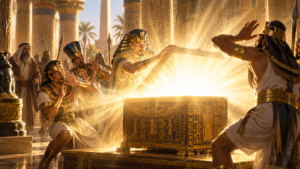
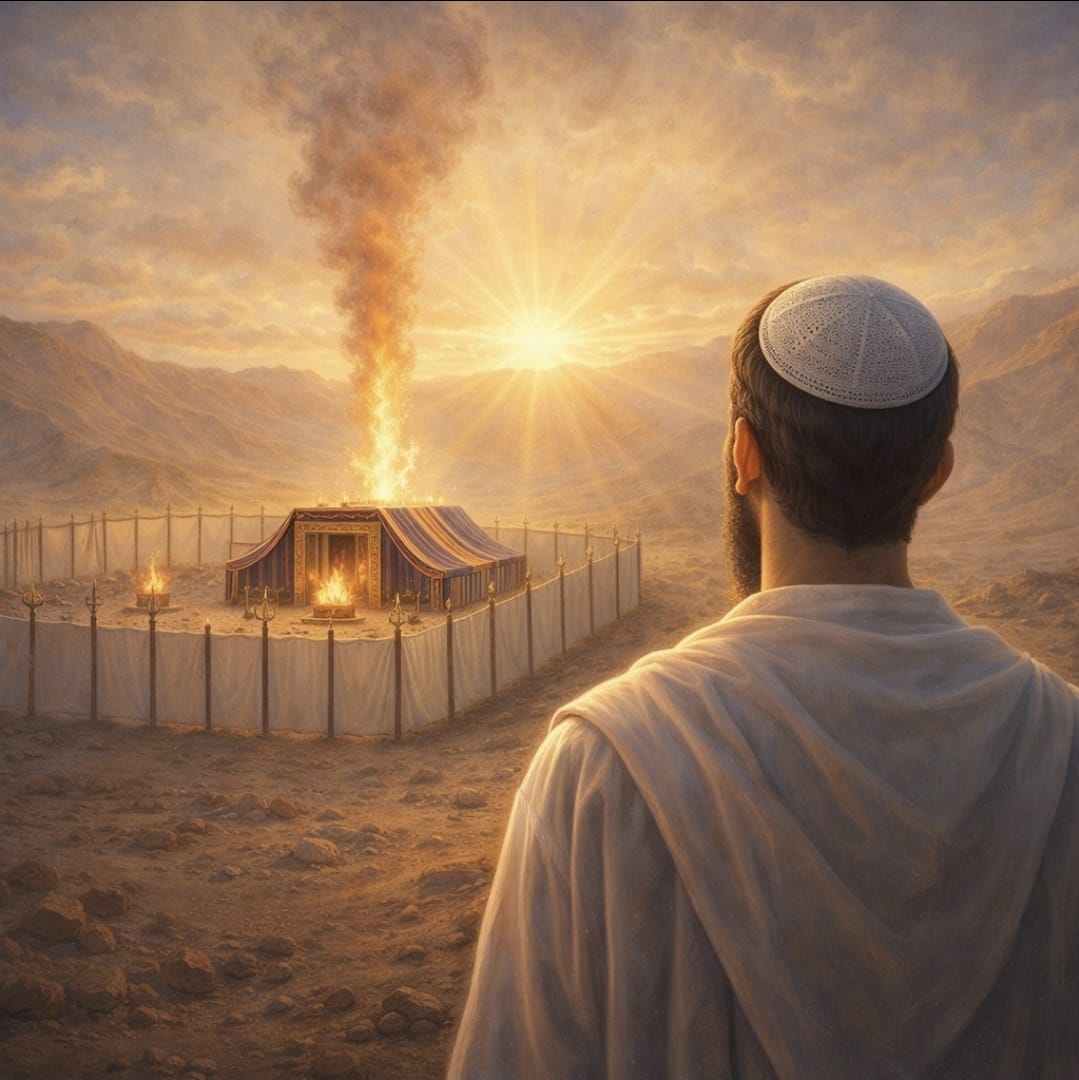
This week we read the combined parshiyos Vayakhel–Pekudei, which describe the gathering of the Jewish people to build the Tabernacle (Mishkan) and conclude Sefer Shemot with the revelation of the Shechinah dwelling within it. Rabbeinu zal teaches (based on Sichos HaRan 22) that the Mishkan itself contains a powerful spiritual force. The word Mishkan (משכן) is related to “Moshcheini” (משכני)—a drawing power, like a magnet. Just as a magnet pulls metal toward it, the holiness of the Mishkan draws a person toward kedushah, toward the Beis HaMikdash, and toward the tzaddik emes. At the same time, there exists a repelling force that tries to push a person away from holiness. A person must therefore remain alert and choose to allow himself to be drawn by this holy magnetic pull. This idea connects deeply with the Mishnah in Sanhedrin: “Kol Yisrael yesh lahem chelek l’Olam Haba.” Just as the Mishkan draws the Jewish people toward the Shechinah in this world, the ultimate destination of the soul is Olam HaBa, the eternal closeness to Hashem.
On a Deeper Level
Let’s take a moment to explain the words of the Mishnah according to Kabbalah. It’s best to start with a solid foundation. Even if we don’t fully understand these concepts, our neshamos do. If we cannot feel our neshama, we can still be certain that it is uplifted and enriched by words of this nature. The Arizal teaches that these words bring the greatest ta’anug (delight) to the neshama. The Torah is an Eitz Chayim, a tree of life—life for the neshama. Especially this type of knowledge, which reaches Olam Ha’atzilus, the highest of the heavens, is the most profound ta’anug for the neshama, as far as Torah is concerned.
The Garden of Eden
The Arizal explains that when we say “yesh lahem chelek“, we can understand this in the context of Gan Eden, the spiritual garden. In the language of the Sefiros, the Malchus—the spirit of Hashem, with which the neshama merges upon ascending to the heavens—is also called a garden. This is referred to as “Chakal Tapuchin Kadishin“—”the orchard of holy apples.” This Chakal (orchard) is the chelek in Olam Haba. The words chelek (חלק) and chakal (חקל) share the same letters, revealing that every Jew has a portion in this spiritual garden.
Why is this Garden So Special?
Because it represents the ultimate purpose of creation—the unity and merging of divine forces. Just as a Jew is only a chatzi adam (half a person) without a spouse and becomes an adam hashaleim (a complete person) through marriage, the mitzvos we perform in this world facilitate the merging of Hakadosh Baruch Hu with the Shechinah, akin to the union of a king and queen. Thus, in Gan Eden, there is a purity—the peak of kedushah—where spiritual perfection is attained, and the neshama itself partakes in that perfection.
The Three Phases of Olam Haba
The concept of Olam Haba is multi-faceted. Many assume it simply refers to Gan Eden, but in truth, there are three distinct phases of the afterlife. The first is Gan Eden, where the neshama experiences divine reward. The second is Techiyas HaMeisim, the resurrection of the dead, when souls reunite with their physical bodies. The third and most profound is Le’Atid Lavo, the ultimate future world, where creation is renewed.
First Hereafter: Gan Eden
The Mishnah states that every Jew has a portion in Olam Haba. This means that even a Jew who sins is still assured a place in the next world. However, there are two separate accounts: the first is payment for sins, as a soul must atone for transgressions, and the second is the reward for mitzvos. The first account settled is the payment for sins. When a neshama comes before the Beis Din shel Ma’alah, the heavenly court, it is first sent to clear up the account of sins. Then, once purified, it joins the tzaddikim in Gan Eden. While some souls experience a more direct path to Gan Eden, others require a more arduous cleansing process. Nevertheless, every Jew ultimately reaches this spiritual realm.
Second Hereafter: Techiyas HaMeisim
After the era of Mashiach, a forty-year period of peace and divine rule will ensue. However, only those alive at that time will experience it physically. Those who have passed away will observe from above, awaiting their moment. At the culmination of this period comes Techiyas HaMeisim, when the dead will be resurrected. The bodies, which seemingly vanished, will be restored and reunited with their neshamos. This marks the next phase of existence—where Olam Haba is no longer just a spiritual realm but a tangible, physical reality.
Third Hereafter: Le’Atid Lavo
The most profound phase of Olam Haba is the final renewal of creation, known as Le’Atid Lavo. After Gan Eden and Techiyas HaMeisim, even the souls that passed through the previous trials will undergo another refining process to determine who merits this ultimate existence. The Tosefos explains that even a tzaddik who attained Gan Eden must stand trial again to determine if he is worthy of Le’Atid Lavo. This stage represents the true Olam Haba, where Hashem renews the entire creation in its purest form.
Rabbeinu zal’s Promise
Rabbeinu zal makes a remarkable statement: “Anyone who attaches himself to the tzaddik emes, follows his words, and accepts his guidance—through hisbodedus and emunah peshutah—is assured not just a place in Gan Eden and Techiyas HaMeisim, but also in Le’Atid Lavo.” This is an extraordinary guarantee. It offers a level of hischazkus—encouragement of faith—beyond comparison. Being close to a tzaddik emes ensures an eternal future in all three phases of Olam Haba. May we be zocheh to accept the words of our chachamim with implicit faith, believing in the words of the Torah and the tzaddikim, so that we may merit to see with our own eyes the coming of Mashiach, the victory of Klal Yisrael over our enemies, the rebuilding of the Beis HaMikdash, and Techiyas HaMeisim—the resurrection of the righteous. Amen.
- 0 comment