- Prayer ⬦ Read ⬦ Shabbat ⬦ Tzaddik ⬦ Weekly Torah Portion
2 Generations of Tzaddikim
In Likutey Moharan, Part 2, Lesson 2, Rebbe Nachman teaches that two seemingly different practices possess the power to help a person emerge from danger and difficulty: giving thanks to Hashem and learning Halachah.
Both bring a person closer to Hashem and connect him to the light of the World to Come. Yet despite their similar spiritual effects, Rebbe Nachman teaches that we need both.
This presents a challenge. People who devote themselves to Halachah are often accustomed to a precise, intellectual approach, distinguishing between what is permitted and forbidden. For them, entering the more expressive world of prayer and thanksgiving can be difficult.
Conversely, someone who is deeply involved in davening and giving thanks may find it challenging to concentrate on the detailed requirements of Halachah.
How can a person develop both qualities?
An unusual explanation of the covenant with Noach, brought by Rashi, offers a remarkable insight into this question.
Thanksgiving and Halachah: Two Paths to Salvation
Rebbe Nachman explains that when a person faces danger, the distress affects the heart and the circulation of blood. He describes the limbs pressing blood back toward the heart, causing it to pound as it struggles with the increased pressure.
Learning Halachah and giving thanks to Hashem possess the spiritual power to restore the proper flow of blood and help a person emerge from danger.
Through these practices, a person connects to the World to Come and gains an extraordinary awareness of Hashem. That connection enables him to draw miracles, kindness and salvation from the World to Come into this world.
Thanksgiving is already woven into Jewish daily life. We begin each morning with Modeh Ani, thanking Hashem for restoring our soul, and our daily prayers contain numerous passages of praise and gratitude.
But Rebbe Nachman also encourages us to thank Hashem in our own words, for the particular kindnesses we experience.
He related that when he was young, he would not content himself with reciting Birkat HaMazon after a meal. He would continue thanking Hashem for each individual food he had eaten.
If he had been served a radish to stimulate his appetite, he thanked Hashem for the radish. He thanked Him for the coffee and cake, the bread and each course of the meal.
The idea is to develop the habit of noticing Hashem’s kindness and expressing gratitude for it.
Yet Rebbe Nachman emphasizes that thanksgiving alone is not sufficient. Even though giving thanks and learning Halachah accomplish something similar, both are necessary.
This distinction is hinted to in Rashi’s commentary on the covenant Hashem made with Noach after the Flood.
The Generations That Did Not Need a Rainbow
Following the Flood, Hashem promised Noach that He would never again destroy the world through such a catastrophe. He established the rainbow as the sign of this covenant.
The rainbow serves as a reminder that even when the world deserves punishment, Hashem will uphold His promise not to destroy it.
The Torah states:
“Vayomer Elokim, zot ot habrit asher ani noten beini uveineichem uvein kol nefesh chayah asher itchem ledorot olam” – “God said: This is the sign of the covenant that I establish between Me and you and every living creature that is with you, for everlasting generations” (Genesis 9:12).
The covenant encompasses mankind and the animal world, which had also been implicated in the corruption preceding the Flood.
Rashi notices an unusual feature of the word ledorot, meaning “for generations.”
Ordinarily, the word is written with two letters vav. Here, however, both are missing.
Rashi, quoting the Midrash Rabbah, explains:
“Sheyesh dorot shelo hutzrechu le’ot” – There are generations that did not require this sign.
These generations were so righteous that a rainbow was unnecessary. Their conduct did not warrant the warning represented by the rainbow.
Rashi identifies two examples of such generations, describing them as Tzaddikim gemurim, completely righteous.
The first was the generation of Chizkiyahu, King of Yehudah.
The second was the generation of Rabbi Shimon bar Yochai.
What distinguished these two generations?
Chizkiyahu: A Generation of Halachah
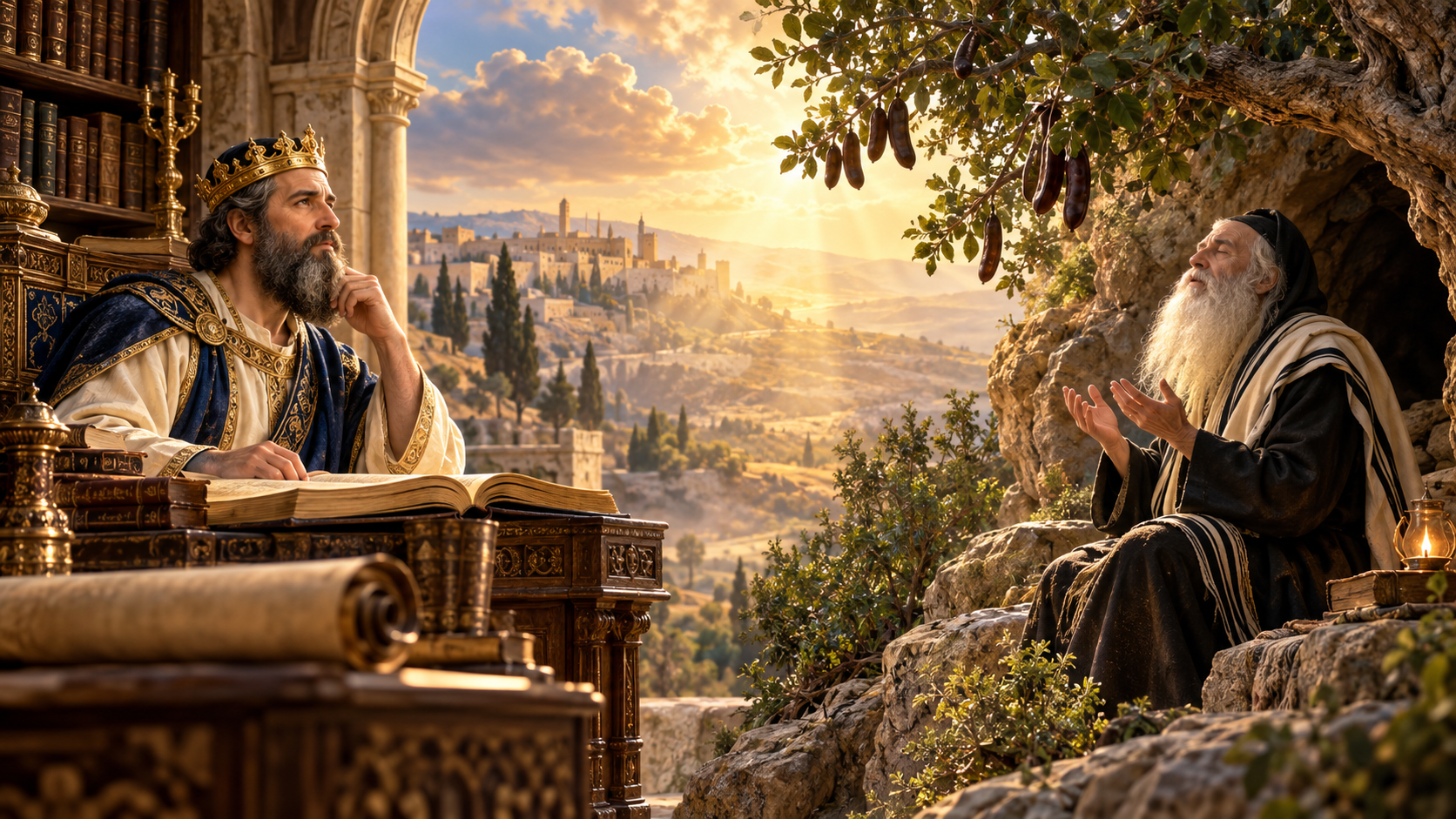
Chizkiyahu HaMelech brought his generation to an extraordinary level of Torah knowledge.
Chazal describe how he compelled the people to study even the most difficult areas of Halachah, particularly the laws of Tumah and Taharah, ritual impurity and purity.
These laws are especially complicated. Although many are not practically applicable today without the Beit HaMikdash, they were essential to Jewish life when the Temple stood.
Chizkiyahu ensured that men, women and children throughout Eretz Yisrael became knowledgeable in these laws.
His determination was extreme. Chazal describe how he placed a sword in the study hall and declared that anyone who refused to study Torah would face death.
Through this uncompromising insistence on Torah study, he brought his generation to such mastery of Halachah that even the most difficult laws of purity and impurity were widely understood, all the more so the laws of Shabbat and Yom Tov.
The merit of this devotion to Halachah made his generation exceptionally worthy.
According to Rashi, it was among the generations that did not require the sign of the rainbow.
The challenge is to approach both Halachah and prayer with excitement, energy and simcha
Rabbi Shimon bar Yochai: A Generation of Prayer
Rashi’s second example is the generation of Rabbi Shimon bar Yochai.
The Midrash and Gemara record Rabbi Shimon’s extraordinary statement that he could exempt his entire generation from judgment through his merit.
But how does the merit of a Tzaddik accomplish such things?
Rebbe Nachman teaches that whatever Tzaddikim accomplish in the upper and lower worlds is accomplished through their prayers.
Their spiritual achievements are not automatic. They devote themselves to davening, and through their prayers their merit becomes effective.
This is also why people visit the graves of Tzaddikim and ask them to pray on their behalf.
The Gemara in Sotah describes how Kalev ben Yefuneh went to the graves of Avraham, Yitzchak and Yaakov and pleaded:
“Avotai, ha’atiru ba’adi shelo ekashel ba’atzat meraglim” – “My fathers, pray for me that I should not stumble through the counsel of the spies.”
Kalev understood the power of the Tzaddikim’s prayers to protect him from the damaging influence of the spies who intended to slander Eretz Yisrael.
Likewise, Rabbi Shimon bar Yochai’s ability to exempt his generation from judgment was connected to his extraordinary power of prayer.
Unlike Chizkiyahu, who brought his entire generation to mastery of Halachah, Rabbi Shimon bar Yochai influenced his generation through the merit activated by his davening.
And Rebbe Nachman teaches that the foundation of prayer is thanksgiving.
We begin the day with Modeh Ani, and in the morning prayers, immediately after Baruch She’amar, we begin Pesukei D’Zimra with Mizmor L’Todah, Psalm 100, a song of thanksgiving.
Before making requests, we acknowledge Hashem’s kindness and thank Him for what He has already given us.
Through this foundation of hoda’ah, prayer becomes a powerful means of bringing salvation.
Thus, Rashi identifies two generations of complete Tzaddikim: one distinguished by its mastery of Halachah and the other by the extraordinary power of prayer.
Why Did Mashiach Not Come?
These two examples raise a striking question.
Chazal teach that Mashiach can come in a generation that is entirely meritorious or entirely liable.
If the generation of Chizkiyahu was so righteous that it did not need the rainbow, why did Mashiach not come then?
And if Rabbi Shimon bar Yochai could exempt his entire generation from judgment, why was the final redemption not brought in his time?
Both generations were described as Tzaddikim gemurim. Why did the world not reach its complete tikkun?
Instead, history continued. Following Chizkiyahu’s generation came further decline and ultimately the destruction of the Beit HaMikdash. Even after the generation of Rabbi Shimon bar Yochai, the long exile continued, accompanied by suffering and difficulties for Am Yisrael.
What was still missing?
Based on Rebbe Nachman’s teaching, we can suggest that the answer lies in the need to combine both spiritual qualities.
Chizkiyahu’s generation excelled in Halachah. Rabbi Shimon bar Yochai’s generation was distinguished by the power of prayer.
But the complete tikkun requires both.
A generation must be devoted to learning Halachah while also being deeply connected to prayer, praise and thanksgiving.
The two approaches are complementary, and neither should come at the expense of the other.
This may explain why even these extraordinarily righteous generations did not bring the final redemption.
The Two Missing Letters
We can now return to the unusual spelling of ledorot in the verse describing Hashem’s covenant with Noach.
The word is missing two letters vav, which the commentaries associate with the two generations that did not require the rainbow.
Each missing vav may hint to the particular spiritual achievement of one of these generations.
The numerical value of vav is six.
In Halachah, we find six fundamental categories, consisting of three pairs: permitted and forbidden, kosher and non-kosher, pure and impure.
The six orders of the Mishnah also correspond to this framework of Halachah.
One vav can therefore hint to the generation of Chizkiyahu, whose outstanding achievement was its mastery of Torah law.
The second vav can be connected to prayer.
The letter vav is known as vav hachibur, the connecting vav. Its elongated form also resembles the neck and throat, through which a person’s voice emerges. The shofar likewise has an elongated form through which sound is produced.
This second vav can therefore represent the generation of Rabbi Shimon bar Yochai, whose merit was activated through prayer.
And at the foundation of effective prayer is thanksgiving.
When approaching a king with a request, a person first brings a gift or expresses appreciation for what he has already received. Recognizing the king’s previous kindness makes his request more acceptable.
Similarly, when we approach Hashem, we begin by thanking Him. Through that gratitude, we prepare ourselves to make our requests and seek His compassion.
The two missing letters thus hint to two different pathways of serving Hashem: the clarity and discipline of Halachah and the expression of prayer and hoda’ah.
Both are needed for the complete rectification of the world.
Bringing the Two Together
The practical lesson is to cultivate both qualities in our daily lives.
Someone who loves learning Halachah should also make time to speak to Hashem, praise Him and give thanks for His kindness.
Someone naturally drawn to prayer and thanksgiving must also devote himself to learning Halachah and understanding how Hashem wants him to live.
Rebbe Nachman does not present these as competing approaches. They complement one another, and together they connect a person to the World to Come and open the way toward salvation.
The challenge is to approach both with excitement, energy and simcha.
May we be zocheh to develop a genuine love for Halachah alongside a constant practice of thanking Hashem. Through the combination of these two forms of avodat Hashem, may we merit the complete tikkun of the world and the coming of Mashiach, speedily in our days.
Shabbat Shalom u’Mevorach.
Meir Elkabas
- 0 comment