Life in the Teivah Was Avodah, Not Escape!
ADAPTED FROM HIS AUDIO SHIUR ON EIN YAAKOV LESSON 142A – SANHEDRIN 108B
A full year of responsibility and avodah
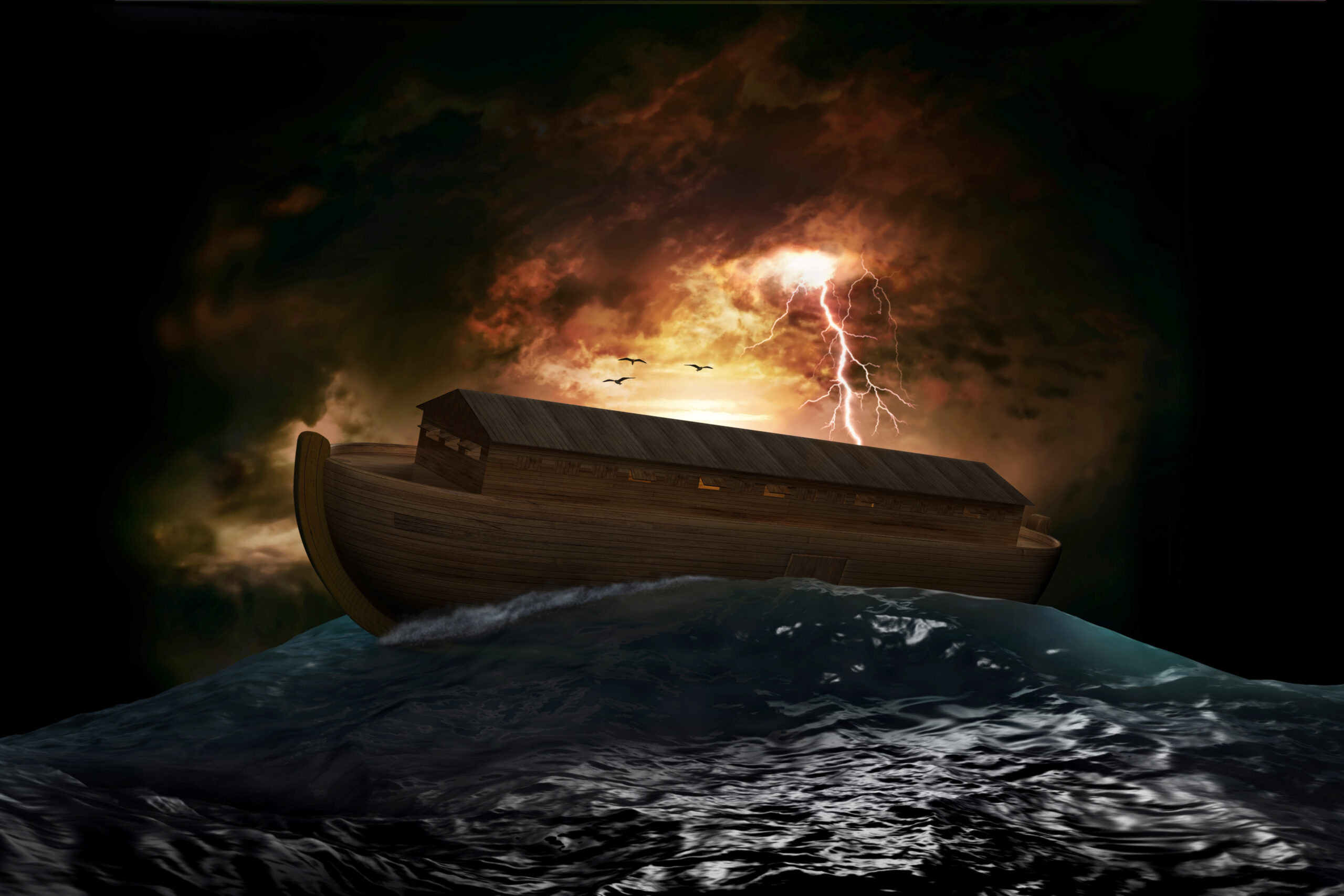
Parshas Noach tells the story of the Mabul, when the world and every living creature on dry land were destroyed. The fish, which lived in the water, were not included in that destruction. Every other living being survived only if HaShem selected it to enter the teivah with Noach and his family. A person could imagine that the teivah was simply a place of rescue, where Noach could withdraw from the destruction and rest. The Gemara shows us that it was exactly the opposite. Life in the teivah meant a full year of suffering, responsibility and constant avodah. Noach was saved not in order to escape his duty, but in order to preserve and serve the living world placed in his care.
Noach, Shem and Eliezer
On the teivah were Noach, his wife, his sons and their wives. The outstanding one after Noach was his son Shem. The word “Semite” comes from Shem, and it was from Shem that Avraham Avinu eventually descended. Shem established the yeshivah of Shem v’Ever, where the Avos HaKedoshim studied Torah. Avraham, Yitzchak and Yaakov all attended the yeshivah of Shem v’Ever. Shem was the one closest to Noach. Avraham Avinu also had one who was especially close to him: his servant Eliezer. We discussed elsewhere, in the shiur in Shabbos, the greatness of Eliezer. He was the equivalent of 318 men combined (318 is the gematria of his name, אליעזר). He was himself considered a Machaneh HaShechinah, and he was zocheh to be one of the nine people whom the Gemara lists as having entered Gan Eden without passing through the process of death.
Day and night without rest
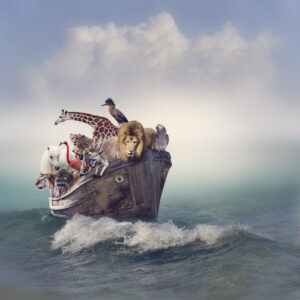
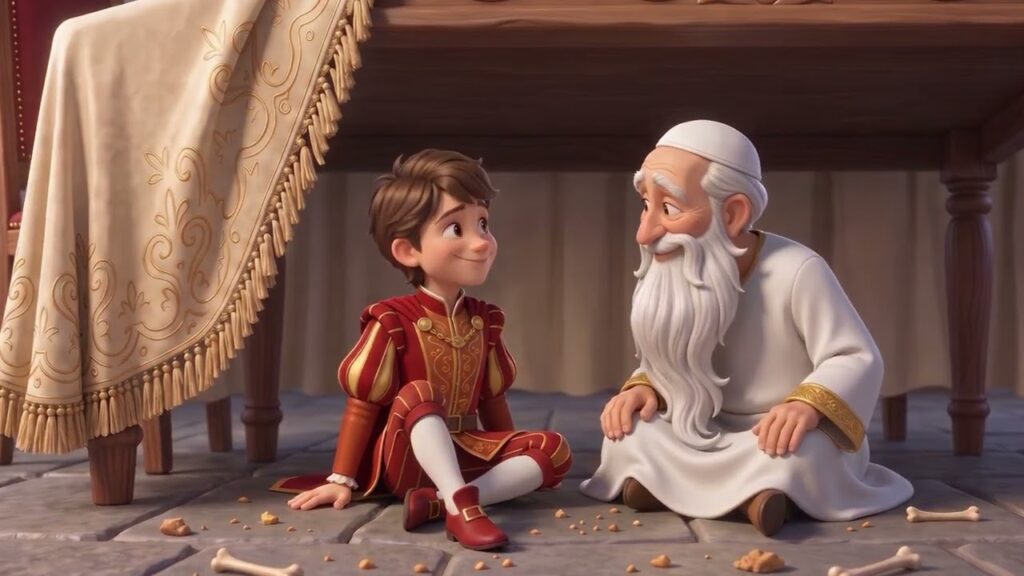
Shem lived long enough to reach the time of the Avos. The Gemara records a discussion between Shem and Eliezer. The Torah tells us that all the living creatures were together in the teivah. Eliezer asked Shem: “How did you get along? How were you able to keep peace in the ark with so many species of living beings? And how were you able to feed them?” Shem answered: “We had a lot of difficulty. There was a lot of suffering. It was no picnic during that year in the ark. Some of the living creatures were accustomed to eating by day, and we had to feed them by day. Others were accustomed to eating by night, and we had to feed them by night.” This means that there was no single feeding time and no period when the whole family could rest. Each creature had its own nature, its own food and its own schedule. Noach and his family had to adjust themselves to the needs of every species placed in their care.
The zikita
Some creatures gave them more difficulty than others. There was a certain small creature called the zikita, commonly identified as a chameleon. Noach could not determine what kind of food it ate. Whatever they tried to feed it, it refused. One day, they were cutting open a pomegranate and a worm fell out of it. The creature ate the worm, and that was how they finally discovered what it was supposed to eat. Here again, Noach could not simply place one kind of food before every creature. He had to watch each one carefully and discover its individual needs.
The lion
The next problem was the lion. The lion, king of the beasts, was very independent and, of course, very dangerous. People are under the impression that everyone in the ark had a good time together. That will be when Mashiach comes, when the animals will live together, all the species, without any difficulty at all. In the teivah, however, Noach still had to feed the animals and keep peace among them. The Gemara says, Shem told Eliezer, that Noach did not know exactly how to feed the lion or exactly when its feeding time was, and so he neglected it for a period of time. The sun shone in through the window of the ark, and this sustained the lion. The rays of the sun can actually nourish, and the sunlight fed the lion for a short period of time
The urshina: the bird that would not trouble Noach
Finally, Noach decided to feed the lion himself. When he came close, the lion struck him, and Noach was seriously wounded. This is a side detail in the story of Noach in the teivah, but it shows us one of the real difficulties they experienced. Noach’s own safety was still at risk because he was responsible for the creatures placed in his care. Shem next said that there was a bird called the urshina. The Midrash calls it the chol, and its English name is the phoenix. The urshina stayed quietly in the shadow at the side of the boat and did not come forward when Noach fed the animals and birds.
Finally, after a long time, Noach noticed this bird. He walked over and said: “Why do you not come forward? Do you not want food?” The bird answered: “Of course I want food. But I saw that you were so busy and so occupied, and that you had so much to do. I did not want to cause you more pain by making you serve me as well.” Noach said: “You are the one who has shown the greatest consideration. Therefore I bless you that you should never die.”
First of all, we see that Noach understood the language of the birds. The Gemara tells us in a number of places about people who possessed this wisdom. We find it even in more recent times: the Arizal and the Baal Shem Tov could speak freely with animals and birds.
The phoenix and eternal life
More importantly, the Gemara says that the phoenix was blessed by Noach never to die. The Midrash says that the urshina lives for a thousand years. At the end of that time it is consumed by fire, and from the fire it rises again with renewed freshness, younger and with new, colorful wings and feathers. It was not truly destroyed; it could not be, because the blessing was that it should never die.
There is another Midrash, however, which gives a different reason why the urshina received eternal life. When Adam HaRishon ate from the Eitz HaDaas, every living creature on earth tasted that food. Therefore, when the decree of death came into the world, it affected every living being. The urshina alone did not taste from the Eitz HaDaas, and it was therefore not included in the decree of death.
If this bird had already escaped the decree of death, why did it still need Noach’s brachah? When the decree came from Heaven to destroy the world, everything was included – mankind, animals and birds, everything above the surface of the earth. Noach alone was saved because he was a tzaddik: “VeNoach matza chein be’einei HaShem.” The urshina’s earlier exemption from death would not have saved it from the separate decree of the Mabul. Without the renewed brachah of Noach, the bird would have lost its original blessing and would have been wiped out, despite the fact that it had not eaten from the Eitz HaDaas. Noach’s brachah renewed its blessing of eternal life.
The teivah was avodah, not escape
What do we see from all this? Life in the teivah was not an escape from avodah. Noach had been saved, but his salvation placed the responsibility of the entire living world upon him. Some creatures had to be fed by day and others by night. He had to discover what the zikita ate, deal with the danger of the lion, and notice even the quiet bird that did not ask for anything because it did not want to burden him. This is true chesed. It is not enough to give what is convenient for us, at the time that suits us. We must see what the other creature actually needs. One needs care by day and another by night. One comes forward and asks, while another remains silent and must be noticed. A person may ask HaShem to bring him into a teivah and protect him from the storm. He should know that HaShem may be saving him in order to give him an avodah. When HaShem places another person in our care, we must learn that person’s nature and serve that neshamah according to what it needs.
That is the lesson of Parshas Noach. The teivah was not a place where Noach withdrew from the world. It was the place where he served the world. HaShem saved him in order to give him a mission, and Noach carried the future of creation through the Mabul by a full year of patience, responsibility and chesed. The teivah was not an escape from avodah. The teivah itself was the avodah.
- 0 comment