The Praise of Halakha
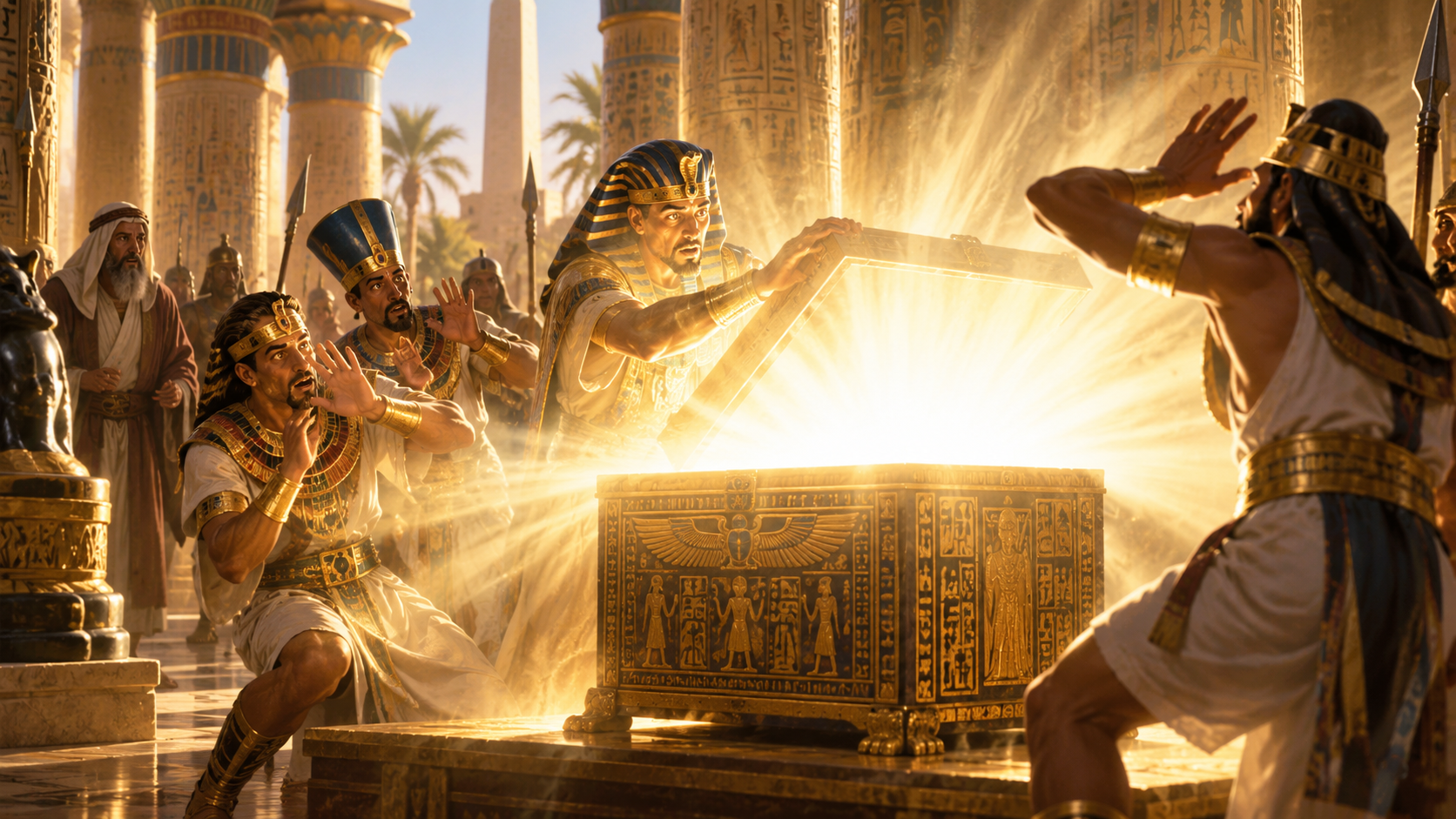
In Parshat Lekh Lekha, Avraham and Sarah descend into Egypt, where Sarah is taken to Pharaoh’s palace. The Torah describes how the Egyptians praised her beauty, how Pharaoh bestowed gifts upon Avraham and how Hashem eventually afflicted Pharaoh with plagues.
Behind these events lies a deeper process of spiritual rectification, explained by Reb Noson in Likutey Halachot, Pesach 4, based on Rebbe Nachman’s teaching in Likutey Moharan, Part 2, Lesson 2.
At the center of this teaching is the extraordinary power of learning Halachah and giving thanks to Hashem. These two practices help rectify the damage caused by Adam and Chava’s sin, purify the spiritual life force of mankind and ultimately bring the light of the World to Come into this world.
To understand their connection to Avraham and Sarah’s descent into Egypt, we must first examine what happened when Adam ate from the Tree of Knowledge of Good and Evil.
Adam and the Purification of Blood
The name Adam can be divided into two parts: alef and dam, meaning blood.
The letter alef represents the highest spiritual levels, associated with the Keter and Hashem’s unity. Dam represents the blood that sustains human life.
Mankind was created to elevate his blood and reconnect it to Hashem, represented by the alef. Even the letters of dam, reversed, hint to modeh, giving thanks.
Hashem created the world to bestow goodness upon His creations. Man’s role is to receive that goodness, recognize its Divine source and express his appreciation through thanksgiving.
But when Adam and Chava ate from the Tree of Knowledge of Good and Evil, something changed.
Food enters the body and nourishes the blood. By eating from the forbidden tree, Adam and Chava introduced a mixture of good and evil into their blood system, spiritually tainting the life force of mankind.
Reb Noson explains that the rectification of creation now requires separating that mixture and restoring the blood to its proper spiritual state.
How can this be accomplished?
Rebbe Nachman teaches that two essential practices achieve this clarification: giving thanks to Hashem and learning Halachah.
The word Halachah is related to halichah, walking or proceeding along a path. But Rebbe Nachman also connects it to tahaluchat hadamim, the circulation of blood.
Learning Halachah helps restore the proper flow of blood, physically and spiritually, removing the spiritual obstructions created by the mixture of good and evil.
Halachah clarifies what is permissible and forbidden, pure and impure, right and wrong. Through that clarification, the good becomes recognizable, and a person can express his appreciation to Hashem.
Thanksgiving and Halachah therefore work together. Both separate and reveal the good that has become obscured.
The Five Types of Blood
Reb Noson develops this idea through the laws of family purity, which deal directly with the distinction between pure and impure blood.
The laws of Niddah discuss five appearances of blood, and these distinctions carry particular spiritual significance.
Rabbi Aryeh Kaplan, in Waters of Eden: The Mysteries of the Mikveh, discusses the connection between the menstrual cycle and the sin of the Tree of Knowledge. According to this understanding, before the sin, Chava did not experience menstruation as women do today. The menstrual cycle emerged as part of the consequences of eating from the forbidden tree.
Why does this matter so much?
Because the creation of human life is connected to blood. The processes of conception, menstruation and childbirth involve the blood system, and bringing another human being into the world represents one of the highest expressions of creation.
The laws governing this blood therefore express, in a particularly significant way, the broader spiritual condition of mankind.
The rectification of the five categories of blood becomes a central part of restoring the purity that was lost through Adam and Chava’s sin.
This also helps explain the spiritual purpose of the Jewish people’s exile in Egypt.
Egypt and the Rectification of Blood
The Arizal teaches that the descent into Egypt was necessary to clarify the spiritual damage caused by the Tree of Knowledge of Good and Evil.
This process of clarification is connected not only to the Egyptian exile but also to the subsequent exiles of the Jewish people, including those associated with Babylonia, Greece and Rome.
The connection to blood is particularly evident in the Exodus.
The first plague inflicted upon Egypt was dam, blood.
Later, before the final plague, the Jewish people were commanded to place the blood of the Korban Pesach upon their doorposts. This blood distinguished their homes from those of the Egyptians, protecting them from the destruction of the firstborn.
In this interpretation, the blood of the Korban Pesach represented the rectification and purification of the blood that had been spiritually damaged through the Tree of Knowledge.
The names Pharaoh and Mitzrayim also hint to the spiritual forces that opposed this rectification.
Rebbe Nachman connects Pharaoh with ha’oref, the back of the neck, while Mitzrayim is associated with meitzar hagaron, the constriction of the throat.
Together, they represent the suppression of holy speech.
The purpose of this constriction is to prevent a person from expressing praise and thanksgiving to Hashem. The spiritual forces associated with Egypt sought to keep holiness trapped, preventing the clarification that comes through Halachah and the expression of gratitude that comes with it.
This connection between Halachah and praise is also hinted to in the familiar expression:
“Lehodot u’lehalel” — to thank and to praise.
Halachah, Hallel and the Number Sixty-Five
The word Halachah has a numerical value of sixty:
Hei (5), lamed (30), kaf (20) and hei (5).
The word Hallel, however, has a numerical value of sixty-five:
Hei (5), lamed (30) and lamed (30).
Reb Noson’s explanation connects the additional five to the five appearances of blood addressed in the laws of family purity.
Halachah, with its numerical value of sixty, combined with the rectification represented by these five blood categories, corresponds to Hallel, whose numerical value is sixty-five.
This reveals a connection between the clarification accomplished through Halachah and the higher level of praise expressed through Hallel.
The Kabbalah describes the mixture of good and evil produced by the Tree of Knowledge as Klipat Nogah, a spiritual force containing an admixture of light and darkness.
The numerical value of Nogah is sixty-four: nun (50), vav (6), gimel (3) and hei (5). Including the word itself as an additional unit brings the total to sixty-five.
This corresponds to Hallel and the rectification accomplished through Halachah and the clarification of blood.
The purpose of Halachah is to distinguish the good from the evil within this mixture. Once the good becomes clear, a person can recognize it and give thanks to Hashem.
That thanksgiving leads to the higher praise of Hallel.
There are many expressions of praise, including shevach and hoda’ah, but Hallel represents an especially elevated form.
This is why Hallel, recited on Rosh Chodesh and the festivals, should be said carefully and without rushing. In Breslov minyanim, even the Hallel of an ordinary Rosh Chodesh can take forty-five minutes, with each word expressed deliberately and appreciatively.
The goal is not merely to recite the words but to experience the gratitude and praise they contain.
Through Halachah, thanksgiving and Hallel, a person participates in the rectification of the mixture created by the Tree of Knowledge.
And this process leads to another important result: the refinement of speech.
The more we recognize the good in our lives, the more we can express our appreciation. And the more we clarify Halachah, the more we participate in restoring the good that has become mixed with evil
Sarah and the Beauty of Holy Speech
Rebbe Nachman teaches in Likutey Moharan Lesson 2, Part 2, that giving thanks to Hashem and learning Halachah ultimately lead to shlemut Lashon HaKodesh, the perfection of holy speech.
Halachah itself requires speech. A person studying Torah law articulates questions, examines differing opinions and discusses the reasoning behind the final ruling. Through this process, he clarifies the Halachah.
But the ultimate goal is a higher level of refined speech.
In Likutey Moharan Lesson 62, Rebbe Nachman connects Sarah with the beauty of Lashon HaKodesh.
This gives us a deeper understanding of the events in Egypt.
When Avraham approached Egypt, he feared that the Egyptians, whom Rashi describes as deeply immoral, would take Sarah because of her beauty.
According to the Midrash, he concealed her inside a chest.
When the Egyptian customs officials demanded to open the chest where Sarah was hiding in order to determine the level of tax payment, Avraham offered to pay whatever tax they required. If they wanted payment for wheat, barley, silk, linen, silver or gold, he was willing to pay.
But his willingness to pay without opening the chest aroused their suspicion.
They insisted on examining its contents, and when they opened it, they discovered Sarah.
The Midrash describes an extraordinary light emerging from the chest, revealing not merely Sarah’s physical beauty but her exceptional spiritual stature.
The Torah states:
“Vayir’u haMitzrim et ha’ishah ki yafah hi me’od” — “The Egyptians saw the woman, that she was exceedingly beautiful” (Genesis 12:14).
The word me’od, meaning exceedingly, contains the same letters as Adam.
In the context of Reb Noson’s teaching, this hints to Sarah’s role in rectifying the spiritual damage associated with Adam and the blood.
The Midrash describes Sarah’s beauty as surpassing even that of Chava, who was created directly by Hashem. Although Sarah was born naturally, she reached an extraordinary level of purity and spiritual beauty.
Her beauty expressed the elevated level of holy speech she had attained through the rectification of the blood.
This was precisely what the spiritual forces of Egypt sought to capture.
Why Did Pharaoh’s Ministers Praise Sarah?
The Torah continues:
“Vayir’u otah sarei Pharaoh, vayehalelu otah el Pharaoh” — “Pharaoh’s ministers saw her, and they praised her to Pharaoh” (Genesis 12:15).
The word vayehalelu, meaning “they praised,” is particularly significant.
We ordinarily associate Hallel with praising Hashem. Yet here, the Torah uses the language of Hallel to describe Pharaoh’s ministers praising Sarah to be fit for their king.
Why?
Avraham and Sarah had descended into Egypt to begin extracting the holy sparks trapped there through the corruption of the Tree of Knowledge.
Their mission was to initiate the clarification of Halachah and the rectification of blood long before their descendants would experience the Egyptian exile.
This preliminary work would help prepare the way for the eventual redemption.
Sarah represented the beauty and completeness of holy speech, which results from the clarification accomplished through Halachah.
The ministers of Pharaoh recognized this elevated quality and sought to bring it under Pharaoh’s control.
The expression vayehalelu otah el Pharaoh therefore hints to an attempt to capture the spiritual power of Hallel.
Hallel has a numerical value of sixty-five, corresponding to Halachah together with the five categories of blood. Sarah represented the rectification of this entire process.
By bringing her to Pharaoh, the Egyptians sought to trap that holiness within the spiritual constriction represented by Pharaoh and Mitzrayim.
Their objective was to prevent the rectification from taking place.
As long as good and evil remain mixed together, the forces of evil can continue drawing nourishment from the holiness trapped within them.
But once the good is separated and restored to its proper place, that source of nourishment disappears.
Egypt therefore sought to preserve a world dominated by physical desires, materialism and immorality, without Halachah, thanksgiving or the recognition of Hashem.
Therefore they wanted to submit Sarah under their dominion, thus directing the Hallel towards Pharaoh and Egypt.
The Exile of Halachah in Egypt
Reb Noson explains that the Jewish people’s later enslavement in Egypt also expressed the concealment of Halachah.
The Torah describes their forced labor as chomer u’levenim, mortar and bricks.
The Zohar connects chomer with chumra, the stringent and difficult aspects of Halachah, and levenim with libun Halachah, the process of clarifying and resolving questions in Torah law.
Libun is associated with making something white or clear.
The bondage of Egypt therefore represented the spiritual difficulty of clarifying Halachah.
Although the Torah had not yet been given at Har Sinai, the Jewish people already possessed teachings transmitted through Avraham, Yitzchak, Yaakov and subsequent generations, including Levi and Amram.
Torah study existed before Sinai, even though the formal giving of the Torah and its commandments would take place only afterward.
What was trapped in Egypt was the ability to clarify that Torah and bring its teachings into proper expression.
Pharaoh and Mitzrayim, representing the constriction of holy speech, sought to prevent that clarification.
Avraham and Sarah’s descent into Egypt began the process of releasing the holiness that would later enable the Jewish people to emerge from exile.
The Gifts Given to Avraham
After Sarah was brought to Pharaoh, the Torah states:
“U’leAvram heitiv ba’avurah” — “And he treated Avram well because of her” (Genesis 12:16).
Avraham received sheep, cattle, donkeys, servants, maidservants, female donkeys and camels.
Reb Noson explains that these gifts contained holy sparks that had become trapped within Egyptian materialism.
As Avraham received them, he was extracting those sparks from the spiritual forces holding them captive.
This was part of the mission that brought Avraham and Sarah to Egypt in the first place.
Their presence initiated the clarification of holiness within a place dominated by the forces opposing Halachah, thanksgiving and refined speech.
Once Avraham had received these gifts, this stage of the mission was complete.
The Torah immediately continues:
“Vayenaga Hashem et Pharaoh nega’im gedolim v’et beito al devar Sarai eshet Avram” — “Hashem afflicted Pharaoh and his household with great plagues because of Sarai, Avram’s wife” (Genesis 12:17).
Rebbe Nachman connects Sarah with holy speech, and the Torah’s expression al devar Sarai also hints to the power of her words.
Pharaoh was afflicted, and when he learned that Sarah was Avraham’s wife, he demanded that Avraham take her and leave Egypt.
Avraham and Sarah departed, having begun the spiritual work that would ultimately assist their descendants in leaving the same country generations later.
Why Learning Halachah Matters So Much
The events in Egypt reveal the extraordinary importance of learning Halachah.
A person may wonder why Rebbe Nachman insists that no day should pass without studying it.
After all, Halachah can be difficult. Its many distinctions between permissible and forbidden, kosher and non-kosher, pure and impure may sometimes seem technical or repetitive.
But Reb Noson teaches that learning Halachah accomplishes far more than acquiring practical information.
Every clarification of Halachah participates in the separation of good from evil that has been necessary since Adam and Chava ate from the Tree of Knowledge.
By clarifying Hashem’s will, a person contributes to the rectification of the world.
That clarification is connected to the purification of the blood and to the ability to express genuine thanksgiving.
Halachah and hoda’ah work together, bringing a person toward the higher praise of Hallel and ultimately toward complete Lashon HaKodesh.
Through these practices, the holiness of the Tree of Life and the light of the World to Come can shine into this world.
And Rebbe Nachman teaches that they also possess the power to help a person emerge from danger and difficulty.
The practical lesson is therefore to make both part of our daily lives.
We should learn Halachah every day, even when the material requires effort, and accustom ourselves to repeatedly thanking Hashem for His kindness.
The more we recognize the good in our lives, the more we can express our appreciation. And the more we clarify Halachah, the more we participate in restoring the good that has become mixed with evil.
May we be zocheh to strengthen ourselves in both learning Halachah and giving thanks to Hashem, refining our speech and bringing the light of the World to Come into our lives. Through this avodah, may we emerge from our difficulties and help bring creation toward its ultimate tikkun.
Shabbat Shalom u’Mevorach.
Meir Elkabas
- 0 comment