Teshuvah When Things Are Dark
Leaving Rephidim After Amalek
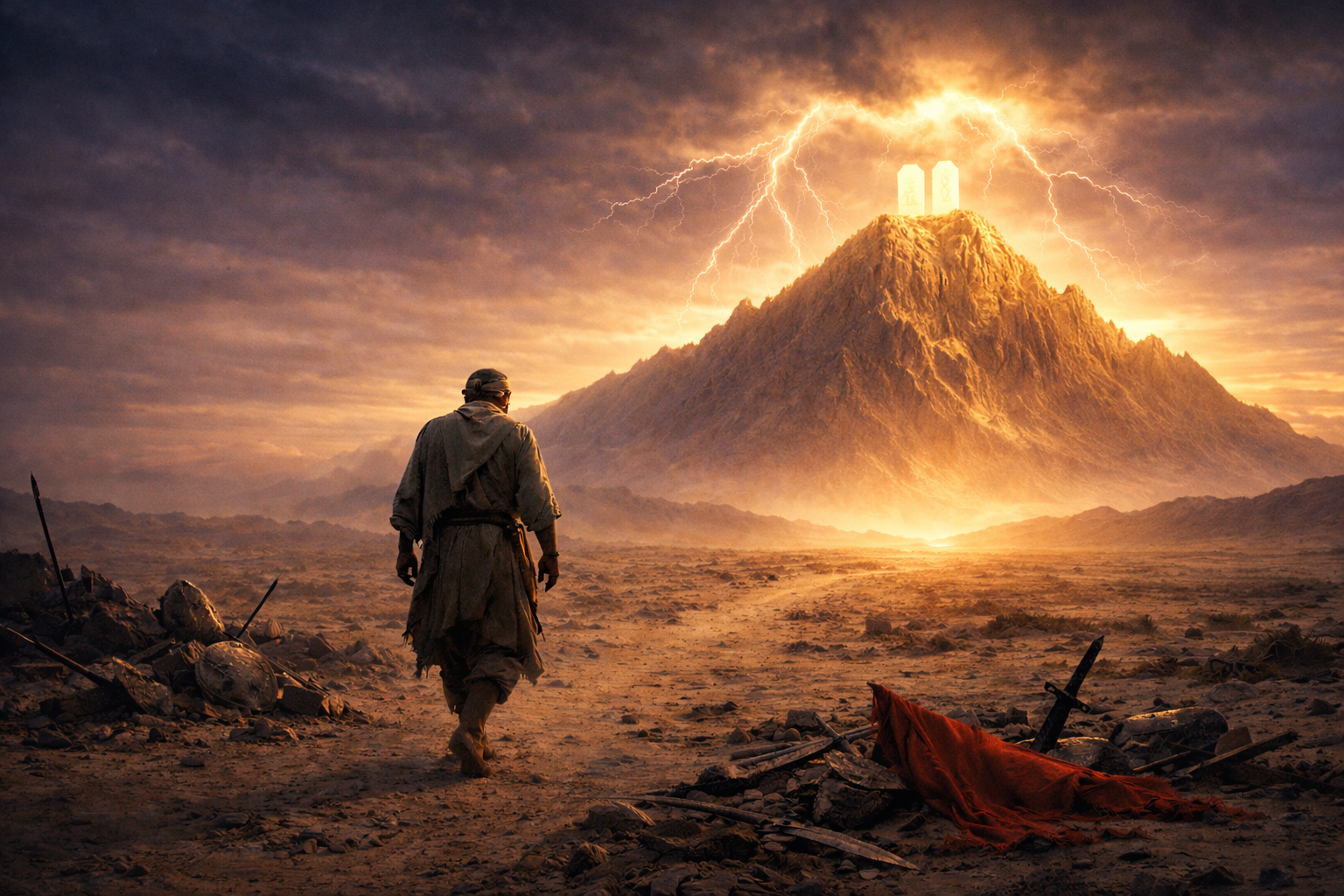
Parshat Yitro opens immediately after one of the most painful moments in the desert journey: the attack of Amalek. At the end of Parshat BeShalach, Amalek strikes the Jewish people in Rephidim, targeting those who were spiritually weakened. Rashi explains that the place-name Rephidim itself hints to the cause—rifyon yadayim, a slackening in devotion to Hashem. When commitment weakens, Amalek gains entry.
This background is critical for understanding the opening movement toward Har Sinai. The Torah states: “They traveled from Rephidim and came to the desert of Sinai, and they encamped in the desert; and Israel encamped there opposite the mountain” (Shemot 19:2). On the surface, this verse seems redundant. We already know they were in Rephidim. Why does the Torah emphasize again where they came from?
Rashi addresses this directly. The Torah is not merely giving travel details. It is drawing a deliberate comparison between how the Jewish people left Rephidim and how they arrived at Sinai.
Teshuvah Begins Before Sinai
Rashi explains that the Torah is teaching a crucial principle: just as the Jewish people arrived at Har Sinai in a state of teshuvah, so too they departed Rephidim in a state of teshuvah. The arrival is described in the singular—vayichan sham Yisrael—“Israel encamped,” not “they encamped.” Rashi famously explains this as ke’ish echad b’lev echad, like one person with one heart.
That unity, that inner togetherness, is itself the sign of teshuvah. It is how Rashi knows they arrived ready to receive the Torah.
But this raises an obvious question. Why does it matter how they left Rephidim? Isn’t it enough that they arrived united at Sinai? Why emphasize the departure from a place associated with failure, spiritual slackening, and Amalek?
Teshuvah After the Fall
This is the heart of the teaching. Rephidim was not merely a geographic location. It was a spiritual low point. The Jewish people had experienced rifyon yadayim, a weakening of effort in Torah and devotion. Amalek attacked precisely at that moment. Jews were killed, morale was shattered, and the nation was spiritually shaken.
After such a fall, there are two possible responses. One is despair: “Look where I am. Look how far I’ve fallen. After everything that happened, after Amalek, after my failures, who says Hashem wants me? Who says I can start again?” This attitude compounds the damage.
The other response is teshuvah born from darkness. Not teshuvah that comes from strength, inspiration, or spiritual clarity—but teshuvah that comes after failure, confusion, and defeat. This is far more difficult. Yet it is precisely this kind of teshuvah that prepares a person to receive Torah.
The Torah emphasizes that the Jewish people left Rephidim with teshuvah to teach that the most critical spiritual work happens not at the peak, but immediately after the fall. Their ability to regroup, reconnect, and move forward after Amalek is what made Sinai possible.
From Weakness to Unity
The contrast could not be sharper. Rephidim represents division, slackness, and vulnerability. Sinai represents unity, commitment, and revelation. The bridge between them is teshuvah—specifically, teshuvah that does not deny failure but refuses to be defined by it.
This is why the Torah links the departure from Rephidim to the arrival at Sinai. Receiving the Torah is not only about preparation through purity, separation, and awe, which would come later. It is first and foremost about the willingness to begin again after spiritual darkness.
The Jewish people did not arrive at Sinai untouched. They arrived having been attacked, weakened, and shaken—and yet willing to stand together again as one.
That decision, made while still leaving Rephidim, was the true preparation for Matan Torah.
No matter how dark things become, maintaining even a minimal commitment to Torah study can bring a person back to life.
Starting Again After the Fall
In truth, there is no other option in life except to return to Hashem. A person falls—so what? Is he supposed to remain there? Unfortunately, many people do exactly that. They give up on their aspirations, their davening, their inner growth. “I tried,” they say. “I can’t anymore.” They give up on prayer, on self-improvement, on simcha, on maintaining a stable schedule in serving Hashem. Overwhelmed by attacks and setbacks, they stop trying altogether.
The Torah teaches a radically different response. After Rephidim—after rifyon yadayim, after spiritual slackening, after being attacked by Amalek with the goal of breaking morale—the Jewish people did not collapse. They experienced an awakening of teshuvah and chose to begin again. The Torah emphasizes this by equating their departure from Rephidim with their arrival at Har Sinai. The same inner stance existed at both points.
This is extraordinary. Normally, when a major spiritual event approaches, excitement naturally lifts a person. Before Pesach, Sukkot, Purim, a wedding, or a journey to Tzaddikim, even someone who is otherwise down feels a surge of energy. That excitement explains the spiritual elevation right before Sinai. But here the Torah reveals a deeper truth: the Jewish people already left Rephidim with that elevated attitude, even before arriving at the mountain.
The Power of the Upcoming Revelation
What gave them the strength to do that? The answer lies in the light of the Torah itself—specifically, the upcoming revelation of the Torah. Even before standing at Sinai, the anticipation of receiving the Torah infused them with enough light to awaken teshuvah after Amalek.
They already possessed some mitzvot from Marah: laws of monetary justice, honoring parents, and other foundational teachings. Yet those alone were not sufficient to prevent rifyon yadayim. What empowered them was the approaching revelation of the Aseret HaDibrot. The Torah itself—its future light—was already shining backward, giving them hope and strength to start again.
This is a principle that applies every day. When a Jew maintains even a minimal, ongoing connection to Torah study, that light is powerful enough to illuminate the darkest moments and restore hope. Torah does not merely respond to success; it revives a person after failure.
The Ten Branches of Torah
The number ten plays a central role here. Just as the Jewish people received the Ten Commandments at Sinai, so too a Jew today should strive to connect to ten branches of Torah study in daily life:
- Chumash
- Tanach
- Mishnah
- Gemara
- Halacha
- Midrash
- Ein Yaakov
- Zohar
- Kabbalah
- Mussar and Chassidut
These ten branches correspond to the Ten Commandments and together form a complete spiritual structure. Even if a person cannot engage in all of them consistently, the awareness of this structure itself brings clarity and direction.
At the very least, one area must never be abandoned.
One Anchor That Never Breaks
The Kitzur Shulchan Aruch teaches that no matter how chaotic life becomes, a person must ensure that at least one form of Torah study is preserved every single day. Schedules change. Life becomes upside down. There are weekdays, Fridays, Shabbatot, weddings, travel, exhaustion, illness. Yet one anchor must remain.
According to Rebbe Nachman, that anchor is Halacha—daily study of practical Jewish law. Even in the most extreme circumstances, even when Torah study is otherwise restricted, Halacha must remain. It provides stability, clarity, and spiritual survival.
From that foundation, the other branches can be added and expanded. But without that anchor, a person is vulnerable to being swept away.
Fighting Amalek Through Torah
Amalek represents doubt. Amalek’s gematria is safek. Doubt erodes emunah, weakens resolve, and convinces a person that there is no point in trying again. The Torah is the antidote. Its light dispels confusion and restores clarity.
This is the message of the Parshah. The Jewish people left Rephidim already in teshuvah because the light of Torah—even before it was fully revealed—was enough to revive them. So too today, no matter how dark things become, maintaining even a minimal commitment to Torah study can bring a person back to life.
May we merit to hold on to that light, to rise again after every fall, to push away doubt, and to walk forward with renewed clarity and strength.
Shabbat Shalom.
Meir Elkabas
- 0 comment