Unity Is Our Strength

The Parshah speaks of the kindling of the Menorah in the Mishkan (Sanctuary) and the Temple. It further discusses the consecration of the Tribe of Levi to serve in the Temple and then moves on to the mitzvah of Pesach Sheini (the Second Pascal sacrifice on 14 Iyar), for those who missed bringing the sacrifice on 14 Nissan. The Parshah then continues with the travels of the Jews in the desert as they approach the Holy Land. It then relates the complaints of those who were dissatisfied with their situation and the manna portions they received. It concludes with the story of the great righteous woman, Miriam, who slanders her brother Moshe and her subsequent punishment. A lot is going on in this Parshah.

We hold these truths to be self-evident: that each of these sections relates not only to life in the desert, but to our lives today as well!

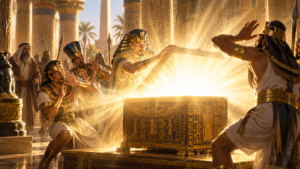
Rebbe Nachman quotes the Zohar that the Candelabrum with its seven lamps represents the individual’s head, for it illumines a person with wisdom. The seven lamps parallel the seven apertures in the head: the two eyes, two ears, two nostrils and the mouth. According to our thoughts, our senses can seek paths to sanctify ourselves. Or, Heaven forbid, we can use our senses to descend into immorality and so on. The Parshah thus begins with kindling the Menorah and proceeds to the sanctification of the Levites.

Pesach Sheini teaches us that we can rectify what we did wrong or fill the gaps in what we lack. This mitzvah is meant to teach us to beg and plead, to admit our mistakes and to seek to rectify them. Then HaShem provides an alternative path to draw close to Him.

The travels of the Jews are the history of our nation. The Torah relates that at times the Clouds of Glory rested upon the Israelite encampment “for a day or two, sometimes a month, or even a year.” There were times we settled in a country for just a short period, and other times we felt comfortable for longer periods. How did we survive? By keeping ourselves together as a nation! By maintaining unity among ourselves, so that we traveled together as a single unit. When we broke ranks, when we became divided and began to complain and protest, as described in the continuation of the Parshah, we lost it. The Torah’s account of the nation after those incidents reveals the downfall of the Jews, as we find in this and the subsequent Parshiyot.

The Parshah thus concludes with Miriam’s slander of Moshe. Imagine: Moshe redeemed the Jews, performed miracle after miracle, yet they rebelled against him to the point that even his righteous sister lodged a complaint against him! Divisiveness never helps – it only causes untold problems (see next week’s Parshah!).

May HaShem help us learn from previous mistakes, forge strong bonds and create unity among ourselves, so that all our troubles will come to an end! Amen.

Have a great Shabbos!

Related Articles

Leave a Comment

Leave a Reply

Your email address will not be published. Required fields are marked *