- Jewish Holidays ⬦ Prayer ⬦ Read ⬦ Redemption
The 4 Species of Sukkot
From Thanksgiving to Holy Speech
As we move from Rosh Hashanah and Yom Kippur toward Sukkot, we begin exploring a new teaching of Rebbe Nachman: Likutey Moharan, Part 2, Lesson 2.
For the past five years, our study has centered on Lesson 24, with its teachings about simcha (joy), spiritual advancement and handling setbacks. That lesson brought profound changes to our connection with Hashem and helped us face difficulties with a more positive attitude. Now we turn to Lesson 2, Part 2, which develops related ideas through the power of thanksgiving and the holiness of Shabbat.
One of the central goals of this lesson is to help a person emerge from danger, suffering and difficult circumstances. Rebbe Nachman describes a series of spiritual stages that lead toward an opening, and Reb Noson develops their practical application in Likutey Halachot, Kil’ei Behemah 4, in the Yoreh De’ah section.
Reb Noson teaches that a person can emerge from his difficulties by developing the habit of thanking Hashem. This is not merely a theoretical explanation of Rebbe Nachman’s teachings. It is practical guidance for living with Torah and coming closer to Hashem.
Thanksgiving is appropriate after a person has been saved from danger, as expressed through the Korban Todah (thanksgiving offering) in the time of the Beit HaMikdash and Birkat HaGomel today. But Reb Noson teaches that a person should also thank Hashem while he is still experiencing difficulty.
Through this practice, he can draw the holiness and joy of Shabbat into the six days of the week, bringing greater calm, connection to Hashem and simcha into his daily life.
How does thanksgiving accomplish this? Rebbe Nachman explains a progression that begins with hoda’ah (thanksgiving) and Halachah, develops into three aspects of truth and then rectifies four forms of speech. The result is a connection to the holiness of Shabbat that can illuminate a person’s difficulties and help him find a way forward.
The festivals of Rosh Hashanah, Yom Kippur and Sukkot reveal this progression in a remarkable way.
Thanksgiving, Halachah and the Three Aspects of Truth
Rebbe Nachman teaches that giving thanks to Hashem and learning Halachah activate the same spiritual process.
At first, these practices seem unrelated. Thanksgiving is an expression of gratitude, while Halachah is the study of practical Torah law. Yet both bring a person closer to recognizing Hashem’s presence and will.
When a person thanks Hashem for the good in his life, including the good he can recognize amid his daily struggles, he becomes more aware that Hashem is involved in everything he experiences.
Halachah develops this awareness from another direction. It clarifies what Hashem wants a person to do and how He wants each mitzvah performed. Rather than deciding for himself what seems spiritually appropriate, a person learns the Torah’s requirements and follows them.
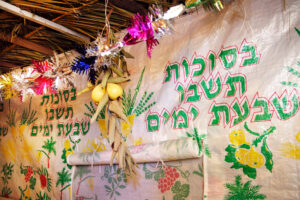
This does not mean that Halachah demands the impossible. It provides guidance for different circumstances. If a person cannot daven at the earliest time, Halachah explains the later times available to him and what to do when a particular time has passed. If he is building a sukkah beneath tree branches, Halachah teaches him whether the branches create a problem and what must be done.
Through Halachah, a person can discover how to serve Hashem in the circumstances in which he finds himself.
This is why Chazal teach:
“Kol hashoneh Halachot b’chol yom, muvtach lo shehu ben Olam HaBa” – Whoever studies Halachot every day is assured a portion in the World to Come.
The teaching specifically emphasizes Halachah because it clarifies the practical will of Hashem.
Thanksgiving and Halachah therefore share a purpose: they increase a person’s awareness of Hashem and draw him closer to Him.
Rebbe Nachman teaches that these practices then bring a person to a higher level of emet, truth, in three areas.
The first is truth in prayer. A person may have been saying the words of the davening without fully connecting to them. Through hoda’ah and Halachah, he begins to pray from a more sincere and truthful place. His words are no longer merely lip service.
The second is truth in Torah study. A person may attend classes and study Chumash, Mishnah, Gemara and other Torah teachings while still experiencing confusion or a lack of clarity. When truth illuminates his learning, he begins to understand what he studies more clearly and how it applies to his life. His learning becomes an expression of Torat emet, the Torah of truth.
The third is truth in marriage partners. Rebbe Nachman teaches that a true shidduch is essential for a person’s development and rectification. Marriage brings a person into a new stage of life, in which he can begin building and advancing together with his spouse.
Rebbe Nachman once said that someone without a tallit should not come to him. In Ashkenazi communities, where men traditionally begin wearing a tallit when they marry, this statement points to the importance of marriage as the beginning of a person’s deeper work in the world.
These three aspects of truth—prayer, Torah and marriage—lead to the next stage: the rectification of speech.
The Four Forms of Speech
Rebbe Nachman calls this stage ribua hadibur, the fourfold structure of speech.
He identifies four forms of holy speech that a person needs in order to fulfill his mission. Each serves a different purpose, and all four are necessary for speech to become complete.
The first is the speech of charity.
A person’s attitude toward giving affects the way he speaks. Someone who is extremely miserly may express the same constriction in his words. His speech can feel closed and ungenerous.
Giving tzedakah develops compassion, and that compassion becomes perceptible in his speech. People are more willing to listen and engage with someone whose words convey genuine concern for them.
This applies both to speaking with other people and to speaking with Hashem.
The second is the speech of teshuvah.
This is the ability to express a sincere desire to return to Hashem:
“Hashem, help me come back to You. Help me become closer to You.”
Words of repentance form another essential part of complete speech.
The third is the speech of influential people.
Rebbe Nachman describes wealthy and influential individuals who can speak effectively with kings, ministers and other government officials. Through their influence, they may be able to mitigate harsh decrees and improve conditions for the Jewish people.
A person does not need to be wealthy or politically influential to apply this aspect of speech. Reb Noson explains that everyone needs the capacity to present his case before Hashem and plead effectively for what he requires.
The fourth is the speech of Malchut, or kingship.
This is speech connected to the coming of Mashiach and the revelation of Hashem’s kingship.
A person may be involved in ordinary activities—business, buying and selling, traveling, raising a family or arranging a home—while recognizing that the present state of the world is temporary. He believes that Mashiach can come at any time and lives with that possibility in mind.
There was a custom in Berditchev, where wedding invitations would announce that the wedding was to take place on a particular date in the Beit HaMikdash in Yerushalayim. Only afterward would they add that, if Mashiach had not yet come, the wedding would be held at a specified address in Berditchev.
Their ordinary plans were made with the coming of Mashiach as the primary expectation.
When all four forms of speech are rectified, a person reaches complete speech, which Rebbe Nachman calls Lashon HaKodesh, the Holy Tongue.
This refined speech connects him to the holiness of Shabbat, allowing its light, holiness and joy to shine into the six days of the week and illuminate the difficulties he encounters.
The Practical Foundation: Thanksgiving and Halachah
The foundation of this entire progression remains simple: give thanks to Hashem and learn Halachah.
A Jew begins the day with thanksgiving and encounters praise and gratitude throughout the daily prayers. Rebbe Nachman also emphasizes the power of Psalm 100, Mizmor L’Todah. He explains how its words, letters and numerical values are connected to subduing the forces of evil that seek to cause a person harm and suffering.
Beyond the established prayers, a person should accustom himself to thanking Hashem in his own words.
He should also learn Halachah every day, increasing his knowledge of what Hashem wants from him.
These practices lead to the three aspects of truth, which activate the four forms of speech and bring a person toward complete Lashon HaKodesh.
The festivals of Tishrei express these stages through their distinctive mitzvot and customs.
Rosh Hashanah: The Shofar and the Three Aspects of Truth
On Rosh Hashanah, the shofar is sounded in connection with the verses of Malchuyot, Zichronot and Shofarot in the Musaf prayer.
These verses praise Hashem through different aspects of His relationship with the world and Am Yisrael. Malchuyot proclaims Hashem’s kingship and includes the kingship of the Davidic dynasty and Mashiach. Zichronot recalls Hashem’s remembrance and kindness, including His remembrance of Noach and of Am Yisrael following Him through the desert. Shofarot recalls the shofar blasts at the giving of the Torah at Har Sinai and of the future redemption.
Reb Noson explains that the shofar blasts are therefore connected to praise and thanksgiving. They are not merely cries for help; they emerge from verses praising Hashem.
In many Chassidic communities, a knowledgeable rabbi stands beside the ba’al toke’a and calls out each blast – tekiah, shevarim and teruah.
On a practical level, this helps the ba’al toke’a follow the correct sequence while concentrating on the blowing. The person calling out must also understand the relevant Halachot so that, if a blast is performed incorrectly, he knows whether it must be repeated and from which point in the sequence.
The blowing of the shofar is thus accompanied by both praise and Halachah, the two foundations of Rebbe Nachman’s teaching.
The three types of blasts also correspond to the three aspects of truth.
Tekiah corresponds to truth in prayer. The word suggests firmness, like driving a nail securely into a wall. It alludes to davening firmly established upon truth.
Shevarim corresponds to truth in Torah study. The word is associated with breaking. When a difficult question in Gemara is resolved, the answer breaks through the obstacle and opens the way to understanding. Shevarim therefore hints to the clarification of Torah through truth.
Teruah corresponds to truth in marriage partners. Teruah consists of at least nine short sounds. The Gemara teaches that ten measures of speech descended into the world, nine of which were received by women. These nine sounds therefore allude to the speech associated with women.
The word teruah is also connected to re’ut, companionship. A wife is her husband’s companion, and the blast hints to the establishment of a true zivug.
Through the shofar, Rosh Hashanah expresses the movement from thanksgiving and Halachah to truth in prayer, Torah study and marriage.
The gift of Yom Kippur is that it’s not only a day of atonement but also a day of restoration
Yom Kippur: Establishing the Three Aspects of Truth
Yom Kippur develops these same three aspects of truth.
The first is prayer. Yom Kippur is the only day of the year with five prayer services: Ma’ariv, Shacharit, Musaf, Minchah and Ne’ilah.
A person spends the day fasting and standing before Hashem in prayer. The additional service of Ne’ilah expresses the exceptional level of prayer available on Yom Kippur and the opportunity to draw down a higher level of truth into one’s davening.
The second aspect is Torah.
Moshe Rabbeinu received the second Tablets on Yom Kippur. The first Tablets, given at Har Sinai, were broken. After Moshe pleaded with Hashem and received the revelation of the Thirteen Attributes of Mercy, he was given the second Tablets, which represent a higher level of Torah accompanied by a higher level of compassion.
The first giving of the Torah took place publicly, before all of Am Yisrael, amid the extraordinary revelation at Har Sinai. The second Tablets were given quietly and modestly, as Rashi explains.
Shavuot commemorates the beginning of receiving the Torah, while Yom Kippur marks the giving of the second Tablets and the completion of that process.
Yom Kippur falls on the tenth of Tishrei. The number ten hints both to the Ten Commandments, which encompass the Torah, and to the minyan required for communal prayer.
The third aspect is true marriage partners.
Chazal describe Yom Kippur as one of the two happiest days of the year. Young women would go out into the vineyards, and young men would seek suitable marriage partners.
Yom Kippur is therefore connected not only to prayer and Torah, but also to the formation of true shidduchim.
The three aspects of truth expressed through Rosh Hashanah are further established on Yom Kippur. This prepares the way for the rectification of speech, which is especially connected to Sukkot.
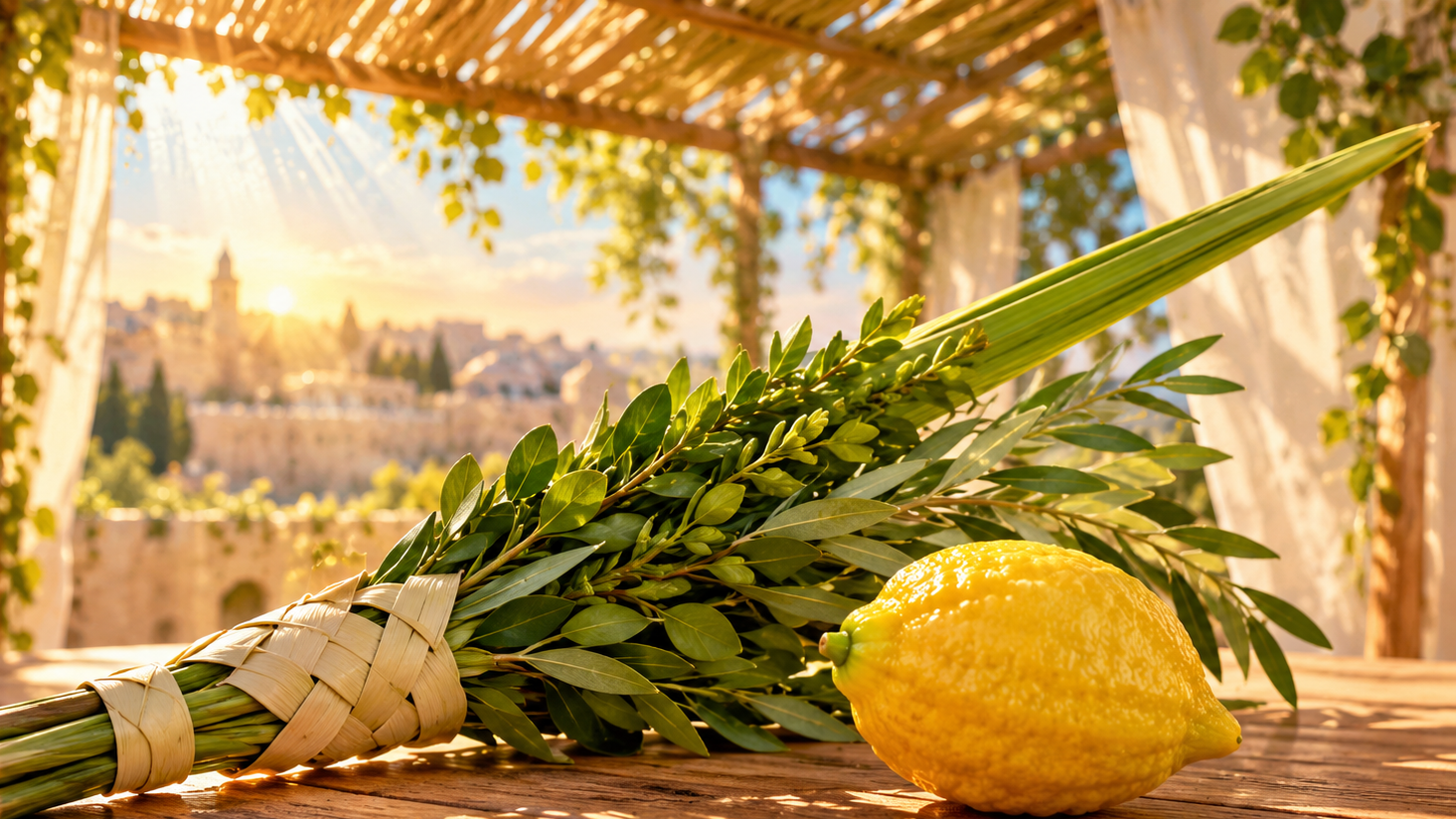
Sukkot and the Four Species
Rebbe Nachman teaches in Likutey Moharan Lesson 48 that Sukkot is connected to the rectification of speech.
Within this broader theme, the four species can be understood as corresponding to the four forms of speech described in Lesson 2, Part 2.
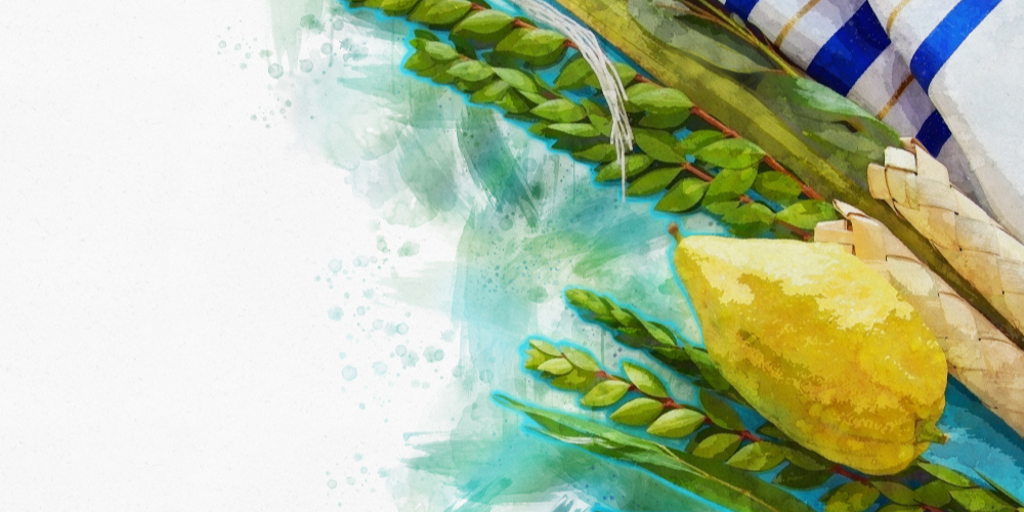
The Torah commands in Parshat Emor:
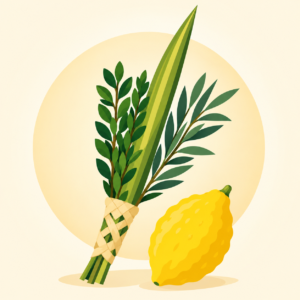
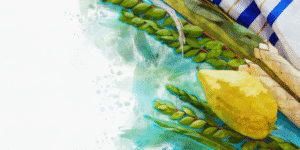
“U’lekachtem lachem bayom harishon pri etz hadar, kapot temarim, va’anaf etz avot, v’arvei nachal” – You shall take for yourselves on the first day the fruit of a beautiful tree, branches of date palms, boughs of thick-leaved trees and willows of the brook.
The Torah continues:
“U’semachtem lifnei Hashem Elokeichem shivat yamim” – “You shall rejoice before Hashem your God for seven days.”
Each species has distinctive qualities that hint to one of the four forms of speech.
The Etrog: Speech of Malchut
The Torah calls the etrog pri etz hadar, the fruit of a beautiful tree.
The etrog is distinctive because it can remain on its tree for an extended period. Even when a new season’s fruit begins growing, fruit from the previous season may remain on the tree.
The etrog is also held separately from the other three species. The lulav, hadassim and aravot are bound and held together in one hand, while the etrog is held in the other. They are brought together when performing the mitzvah, but the etrog retains its distinct position.
This hints to the uniqueness of Malchut: Hashem’s kingship and, by extension, the kingship of Mashiach through which Hashem’s kingship will be revealed.
The beauty and wholeness required of the etrog express this completeness. We seek an etrog that is properly formed, with a well-positioned pitom, free from missing pieces, holes and significant blemishes.
The etrog therefore represents the fourth form of speech, dibur of Malchut: speaking and conducting one’s life with awareness of Hashem’s kingship and the coming of Mashiach.
The Lulav: Speech of Charity
The Torah refers to the lulav as kapot temarim, branches of date palms.
We do not take a cluster of dates. We take the palm branch from which dates can grow.
The expression kapot temarim hints to tzedakah. Kaf means a hand, while kapot is plural, suggesting the hand of the giver and the hand of the receiver.
The dates themselves hint to coins, while the word temarim also suggests an exchange from one person to another.
The lulav therefore corresponds to the first form of speech: the speech of charity.
Just as tzedakah is passed from one hand to another, charitable giving develops the compassion that becomes expressed in a person’s words.
The Hadassim: Speech of Influence
The Torah calls the hadassim anaf etz avot, branches of a thick-leaved tree.
The myrtle is characterized by its leaves growing in groups of three. When the leaves emerge at the same level and overlap with those above them, they can cover the stem so that it resembles a continuous woven chain.
The hadas also possesses a pleasant fragrance, although it does not produce an edible fruit.
Its threefold structure hints to the third form of speech: the speech of influential people who can appeal effectively to kings, ministers and others in positions of authority.
The number three connects to the influence of several people approaching a ruler which carries particular weight. Normally a group of 3 individuals carry extreme weight and influence.
The fragrance of the hadassim adds another dimension. Successful influence requires more than access to powerful people. A person’s words need chen, grace and charm, represented by a pleasant scent. Such speech can persuade those in authority to act for the benefit of the Jewish people.
The hadassim therefore correspond to speech that can influence others and, on a personal level, to the ability to present one’s requests effectively before Hashem.
The Aravot: Speech of Teshuvah
The final species is arvei nachal, the willow branches associated with streams and abundant water.
Water is connected to teshuvah through the verse:
“Pour out your heart like water before Hashem.”
Repentance requires a person to open his heart and express his desire to return to Hashem.
The aravot, which grow in places supplied with water, therefore represent the second form of speech: words of teshuvah.
Together, the four species correspond to all four aspects of ribua hadibur:
The etrog represents Malchut, the lulav charity, the hadassim influential speech and the aravot teshuvah.
By taking the four species on Sukkot, a person connects to the rectification of speech that follows thanksgiving, Halachah and the three aspects of truth.
From Hallel to Hoshanot
What is the ultimate purpose of rectifying speech?
It is to enable a person to cry out to Hashem properly.
Chazal teach:
“Modeh al ha’avar v’tzo’ek al ha’atid” – A person gives thanks for the past and cries out concerning the future.
Rebbe Nachman is not teaching that someone should merely say “Thank You, Hashem” and expect all his difficulties to disappear without asking for help.
Rather, thanksgiving prepares his speech.
When a person begins by recalling Hashem’s kindness, he is no longer approaching prayer solely from the feeling that nothing good has ever happened to him. He recognizes what Hashem has already done, and from that recognition he can sincerely ask for what he still needs.
The four species express this progression through the order of the Sukkot prayers.
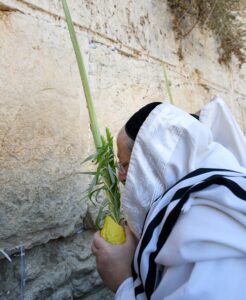
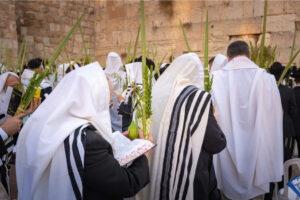
We take the four species during Hallel, the great expression of praise and thanksgiving drawn from Tehillim. We recount Hashem’s kindness and rejoice before Him.
Immediately afterward, with the four species still in our hands, we proceed to Hoshanot.
Now the language changes:
“Hoshana!” – “Please save us!”
We cry out to Hashem for salvation, having first praised and thanked Him.
There is no contradiction between these two forms of prayer. Thanksgiving is the preparation that enables a person to make his request from a more truthful and refined place.
The transition from Hallel to Hoshanot demonstrates the practical purpose of the entire progression described in Lesson 2, Part 2.
Begin by Giving Thanks
Reb Levi Yitzchak Bender related an incident from Uman before World War II.
A man who traveled to Uman every year for Rosh Hashanah told him that he had many troubles and wanted to pour out his heart at Rebbe Nachman’s kever. Yet whenever he arrived, he went blank. Despite having so much to pray about, he could not find the words.
Reb Levi Yitzchak explained that he was beginning in the wrong place.
He should first thank Hashem for all the kindnesses and miracles he had experienced. Only afterward should he open his heart and speak about his suffering and needs.
This is the lesson of Hallel and Hoshanot.
A person begins with thanksgiving, allowing that recognition to open his heart. He can then cry out to Hashem with the complete speech he needs to express his requests.
Drawing the Joy Into the Entire Year
After Sukkot comes Shemini Atzeret and Simchat Torah, when the spiritual work of the festivals culminates in simcha.
The goal is to carry that joy into the rest of the year and draw the light of Shabbat into ordinary life.
Through thanksgiving a person can emerge from his difficulties. The progression described in Likutey Moharan Lesson 2, Part 2, shows how to work toward that opening: give thanks to Hashem and learn Halachah, develop truth in prayer, Torah and marriage, rectify the four forms of speech and then turn to Hashem with complete and sincere prayer.
The four species of Sukkot bring these teachings into our hands. We hold them while praising Hashem in Hallel and continue holding them as we cry out for salvation in Hoshanot.
May we merit a year filled with thanksgiving, Halachah and genuine simcha, refining our speech toward Hashem, toward others and toward ourselves. May our prayers bring us out of difficulty and help us attain shalom bayit, success in Torah study and davening and the fulfillment of our potential. May Hashem have compassion on Am Yisrael, grant us good news and bring Mashiach very soon.
Chag Sameach, Shanah Tovah and Shabbat Shalom.
Meir Elkabas
- 0 comment