Leah’s Tears and Rachel’s Kindness
ADAPTED FROM HIS AUDIO SHIURIM ON EIN YAAKOV LESSON 106A – BAVA BATRA 121 AND SICHOS HARAN 7
Who Should Receive the Birthright?
The birthright was given to Yosef HaTzaddik. After all, shouldn’t birthright mean the one who was born first? He is the bechor; he is to receive the birthright. The first one born was Reuven. Why then was the birthright given to Yosef HaTzaddik, the son of Rachel?
The answer is that the bechorah should have really belonged to Rachel in the first place. In other words, she should have given birth before Leah. The pasuk says:
אֵלֶּה תֹּלְדוֹת יַעֲקֹב יוֹסֵף
“These are the generations of Yaakov: Yosef…” (Bereishis 37:2)
This was the offspring of Yaakov, which means that’s what should have happened actually. Now what stopped this? What caused Rachel to lose out and have the firstborn son born to Leah? The answer, the Gemara says, was the tefillah of Leah, the powerful tefillos that Leah presented before HaShem. This won her the privilege of giving birth to the first son.
However, there was a kindness that followed this. The tzniyus and kindness of Rachel was so great that HaShem returned the birthright to her son rather than to the son of Leah. Both of them showed tendencies of purity, both nashim tzidkaniyos. (Bava Basra 123a)
The Tears of Leah
What was the tefillah of Leah? The pasuk tells us:
וְעֵינֵי לֵאָה רַכּוֹת
“And the eyes of Leah were weak.” (Bereishis 29:17)
The Gemara says that if we want to detect beauty in a kallah, in a bride, what do we search for? Beauty in the eyes. If the eyes of a bride possess beauty, you need look no further. In this case, how could the Torah itself speak so degradingly of Leah? Say that her eyes were weak, bad looking, when the Torah even avoids speaking badly of animals?
When the Torah wants to say an animal is tamei, it uses the words:
הַבְּהֵמָה אֲשֶׁר אֵינֶנָּה טְהֹרָה
“The animal that is not pure.” (Bereishis 7:8)
Though they cannot read the Torah, yet the Torah avoids words that are degrading. How can the Torah speak this degradingly about Leah HaTzaddekes? The answer, the Gemara says, is that this was not degrading. Rakos means they were weak, soft from crying, constant crying.
Rivkah had given birth to two sons and Lavan had two daughters. They were related, and therefore it was most fitting, most probable, that the two sons would marry the two daughters. Since Rivkah’s two sons were Esav and Yaakov, Esav the elder and Yaakov the younger, it would seem that Leah and Rachel would have to marry these two, and that Leah would fall into the hands of Esav HaRasha.
For this she was mispallel; she prayed to HaShem constantly, praying to be saved, to be spared from this lot. And because of her tefillos, her eyes became weak from so much crying that the eyelashes fell out. But this is to her benefit; this is to her credit. It shows her greatness. That’s why the Torah mentions it.
Because of these tefillos, HaShem answered her, and she was zoche to become a wife of Yaakov Avinu. Because of her tefillos, she deserved to have the bechorah given over to her. But Rachel proceeded to perform a mitzvah that was so great, tzniyus, modesty, kindness that was so great, that the bechorah was returned to her afterwards.
More Than Modest Dress
What was the tzniyus, the modesty of Rachel? Before we go into this, it’s very important to mention first the translation of a word that is used so often and yet is not fully understood.
When we speak of tzniyus, we generally think of tzniyus in women, modesty in women. And of course, the first point of modesty is modest dress. Tzniyus, though, to go one step further, is more than just dress. Tzniyus means the customs, the attitude, the mannerisms of a person too. This applies to men also. Tzniyus means modesty in speech, to speak softly.
דִּבְרֵי חֲכָמִים בְּנַחַת נִשְׁמָעִים
“The words of the wise are heard in quiet.” (Koheles 9:17)
King Solomon says the first sign of a wise person is that he speaks in a very soft tone and in a kindly voice. Not just to his elders, but even to his equals or to those beneath him, his subordinates.
The Tears This Would Cause
In this case, the Gemara says the tzniyus of Rachel was that when Yaakov Avinu came to Lavan, he desired Rachel for a wife. Lavan agreed that after working seven years for him, he would give Rachel for a wife.
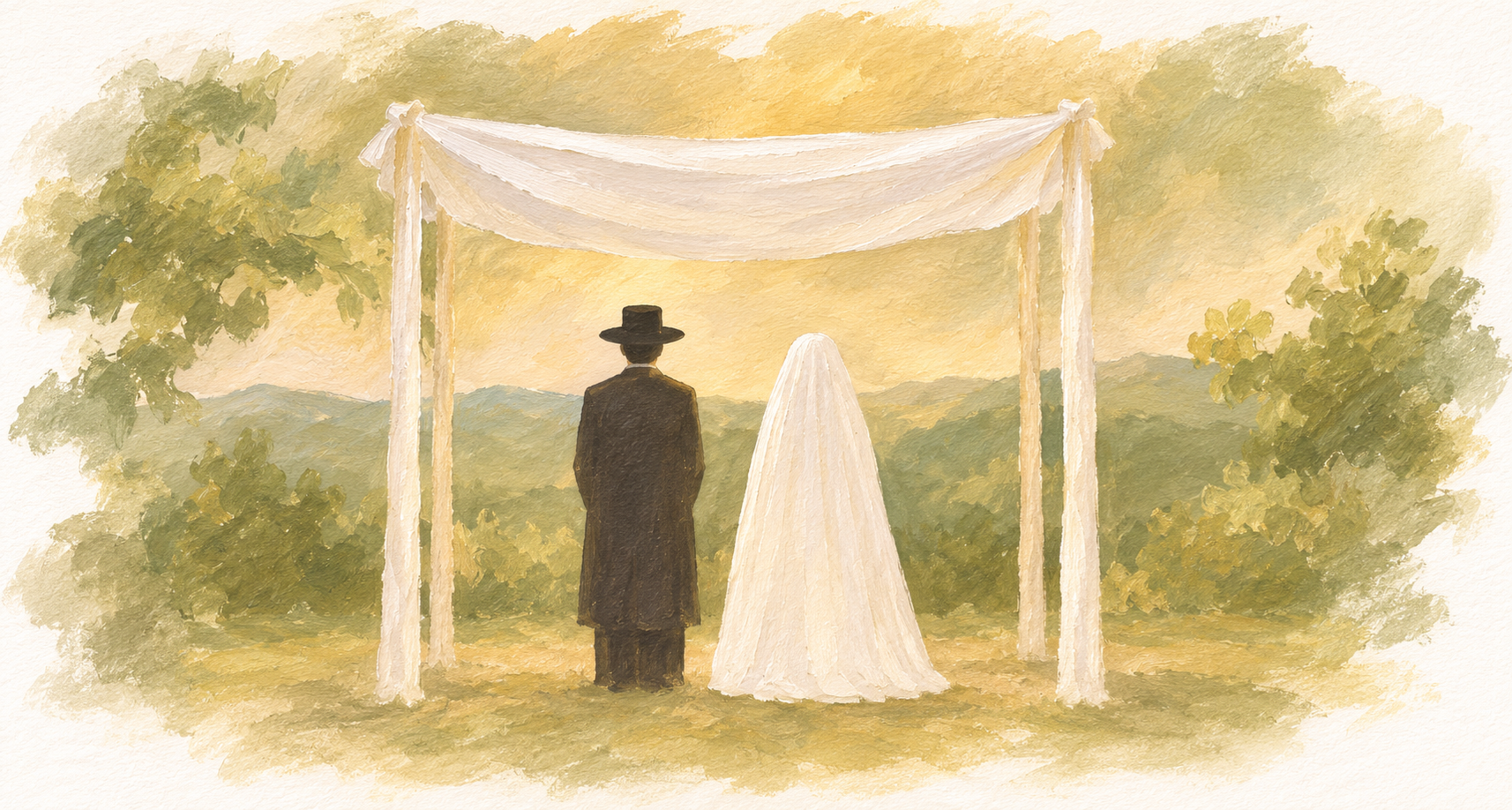
The day of the wedding, Rachel told Yaakov Avinu, she revealed to him, that her father was deceitful. She revealed that that night her father was going to replace her under the chuppah with her sister Leah. Yaakov Avinu told Rachel that he had no fear of this because he was just as wise and shrewd as Lavan; he would not be outwitted.
And so he gave Rachel a special signal. A bride could not be seen; they wore a heavy veil. He gave her certain words that she should say under the chuppah, and thereby he’d know that this was Rachel and not Leah. If he failed to get that signal, he’d know he was being fooled; he’d stop the wedding right there.
This was agreed upon. Afterwards, Rachel had second thoughts. Imagine the embarrassment Leah would have under the chuppah when she’d fail to give the signal and she’d be openly embarrassed in front of everyone, the tears that this would cause, the heartbreak.
And so, to avoid a public embarrassment, Rachel transmitted this secret password to Leah, and that is how Yaakov was fooled. That’s why it says:
וַיְהִי בַבֹּקֶר וְהִנֵּה הִוא לֵאָה
“And it was in the morning, and behold, it was Leah.” (Bereishis 29:25)
Suddenly he found that she was Leah. What’s so sudden about it? Because he thought for certain this was Rachel, according to the plans he had made with Rachel.
This kindness on the part of Rachel, self-sacrifice to give her sister a man she personally desired so much for herself, this kindness was far above and beyond the normal. And for this, indeed, she was zoche to receive the rights to the birthright.
That’s how Yosef HaTzaddik became considered the firstborn and how he received a double portion as far as the tribes were concerned.
The Gates of Tears Are Never Locked
Rabbeinu zal says it is a tremendous merit for a person to come before HaShem and pour out his heart. Every Jew davens to HaShem, but to pour out your heart indicates a special type of relationship, likened to a son coming before his father.
The Gemara says that sha’arey dema’os, the gates of tears, have never been locked and will never be locked. If a person merits shedding a tear before HaShem, he can be absolutely certain that this prayer penetrates the deepest and furthest recesses in Heaven, reaching the Heavenly throne of HaShem. So we see here that when one cries before HaShem, he is like a child crying before a father, and our Father Who is the true Av HaRachaman accepts that prayer.
- 0 comment