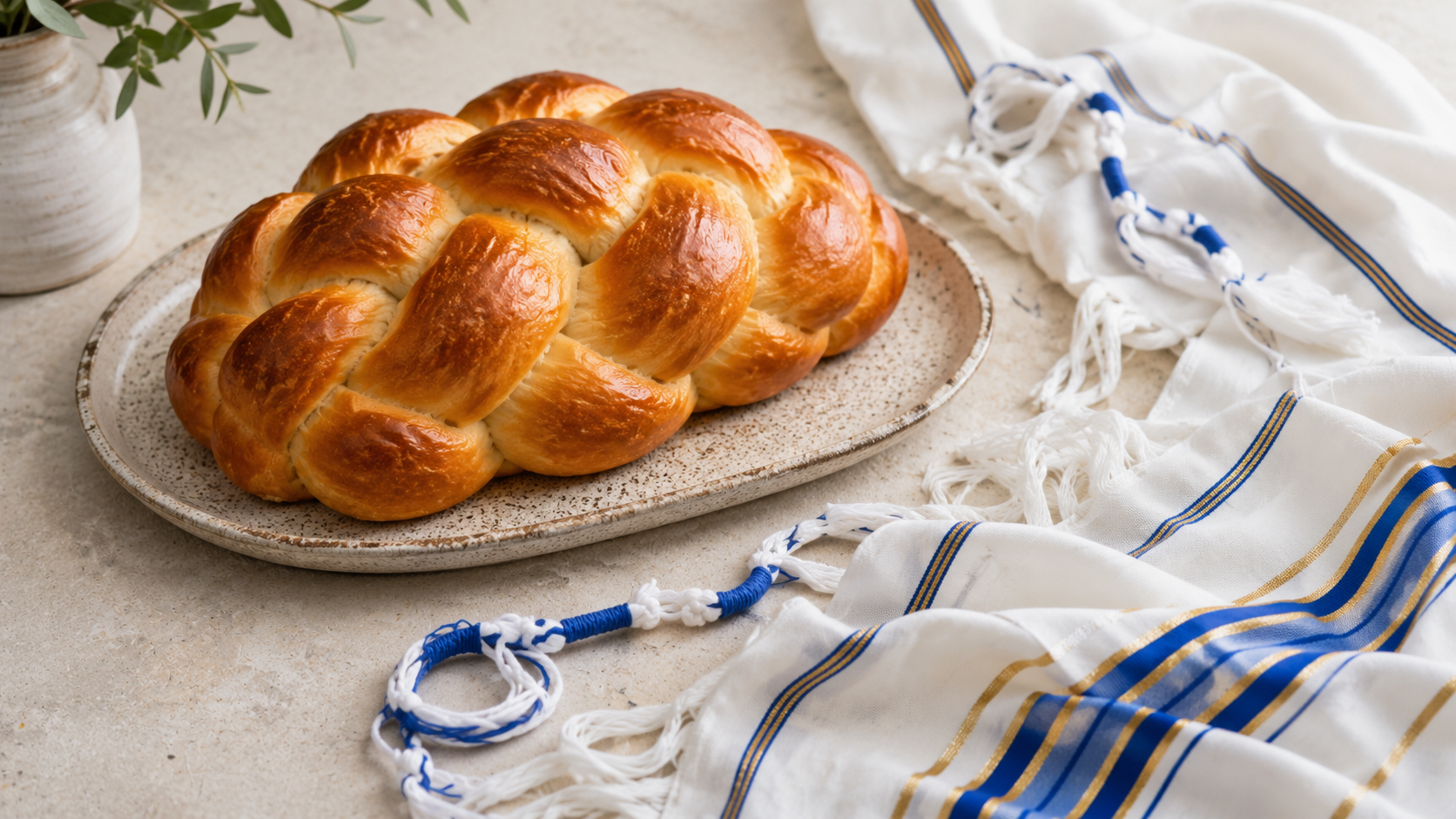
How Challah and Tzitzit Rectify the Spies

Most of this week’s parshah is the infamous story of the meraglim, the spies, who were fortunate enough to tour the Land of Israel (Canaan at that time). They saw the beauty and wonders of the Land, yet they returned with a negative report and swayed the entire nation to reject their ascent to the Land. This folly—worse, this sin—caused the Jews to wander in the desert for 40 years, until they finally merited to enter the Land of our fathers.

The remainder of the parshah speaks of the grain, wine and oil offerings that should accompany one’s sacrifice. It speaks of the mitzvah of offering a portion of one’s kneaded dough to the Kohen (the mitzvah of Challah) and proceeds to inform us of the sin-offering sacrifices brought if one commits idolatry. The parshah continues with the story of Tzelaphchad, who desecrated the Shabbos, and his punishment, and concludes with the mitzvah of Tzitzit.

Let us examine the story of the spies. Moshe chose twelve Tzaddikim—yes, very righteous men—and asked them to check out the Land. He recommended what to look for and advised them about their trip. They spent forty days spying out the Land. They were overwhelmed and impressed by what they saw. They brought back with them some of the incredible fruits of the Land: it took eight men to carry a cluster of grapes, and two men each carried a single fruit – a pomegranate and a fig! Yet despite how incredible the fruits were, they then slandered the Land and its inhabitants. As the Talmud states, “Just as the fruit is different, so too the inhabitants are different. They are too powerful to conquer.”

The nation rebelled and refused to ascend to the Land. God had promised it to them, and were they to strengthen their belief in Him, they would have been able to enter the Land and conquer it even without the use of weapons! (see Rashi on Deuteronomy 1:8) But they failed. Such is the power of slander – it can destroy a person, a community, even a nation.

Reb Noson writes that the parshah’s contents speak of the rectification of the spies. The offerings when bringing a sacrifice represent the ability to sing to HaShem even if one has sinned and brought a sacrifice for repentance. It is followed by the mitzvah of Challah, about which the Torah states, “When you come to the Land…” (Numbers 15:18), indicating that performing this mitzvah causes one to enter the Land. It is followed by the sin-offering sacrifices for idolatry, a reference to strengthening our faith in HaShem and rejecting idolatry. Following this is the story of one who desecrated Shabbos, for Shabbos represents all sanctity and the holy moments a person can acquire during life, and this means the strengthening of our faith in HaShem at all times.

All of these ideas are included in the mitzvah of Tzitzit. The Tzitzit are four and have thirty-two strings. This represents our faith, as the Torah begins with a Bet (value of 2) and concludes with a Lamed (value of 30, together 32), representing our faith in HaShem. With that faith, we can conquer all our enemies, all our opposition, and overcome all our challenges.

May we merit to reject slander, ascend to the Land, and merit to see the Mashiach and the redemption of all Israel, Amen.

Have a great Shabbos

Related Articles

Leave a Comment

Leave a Reply

Your email address will not be published. Required fields are marked *