The Voice That Defeats the Hands of Esav

ADAPTED FROM HIS AUDIO SHIURIM ON EIN YAAKOV LESSON 64A – Gittin 57 AND SICHOS HARAN 69
When Yitzchak Heard Yaakov
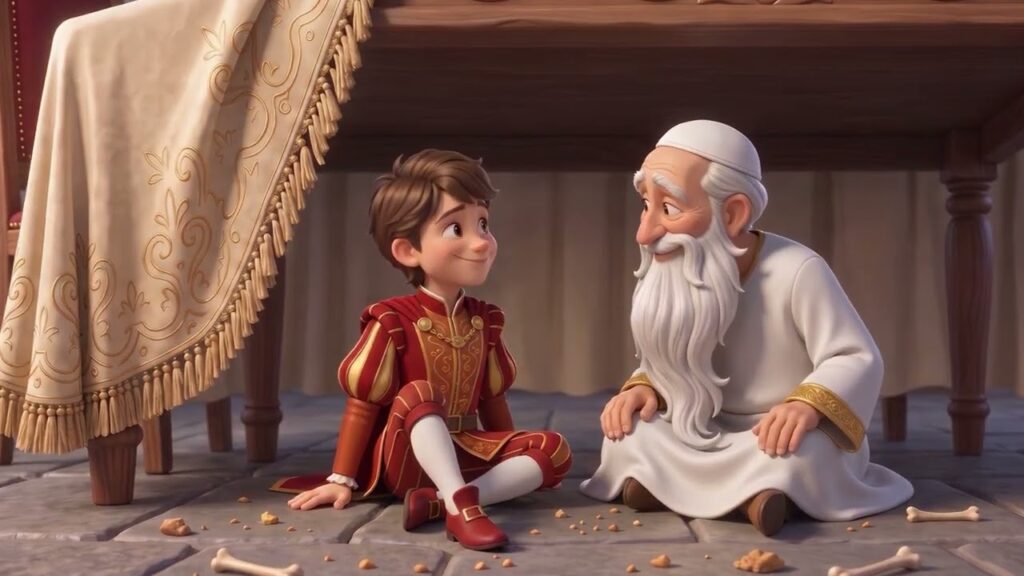
In Parshas Toldos, Yitzchak Avinu was about to give the brachah to Esav. Rivkah took Yaakov, the younger son, and told him, “Go put on the goat skins. Go to your father and receive the brachah he intended to give to Esav.” Why goat skins? Esav was very hairy and Yaakov was very smooth. Yitzchak Avinu, of course, was blind. Once he felt the hairy skin, he would think this was Esav and give him the brachah. This Yaakov Avinu did. But he spoke so politely, so differently from Esav, who was very rough and arrogant, that Yitzchak Avinu was taken aback. “Who are you? You do not sound like Esav. Come over; let me touch you.” When he touched him, he said these famous words:
הַקֹּל קוֹל יַעֲקֹב וְהַיָּדַיִם יְדֵי עֵשָׂו׃
The voice is the voice of Yaakov, but the hands are the hands of Esav. (Bereishis 27:22)
The Gemara says that when Yitzchak Avinu said these words, it was not just making a statement. This was a prophecy coming from the second father of the Jews, and he said it very sadly. He could have said only, “This is kol Yaakov.” Why does it say, “Hakol kol Yaakov”? Why repeat it twice?
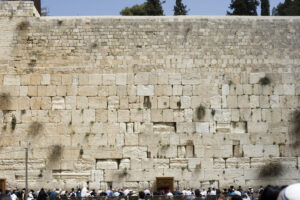
Hakol – this voice, the Jewish voice – would be heard in crying, in mourning, and in screaming when the hands of Esav brought destruction. Those wicked hands, Esav, the Roman kingdom, would destroy the Beis HaMikdash, burn it to the ground, and drive the Jews from their land.
But Yitzchak Avinu said something else besides a prophecy. He notified Yaakov: your children will be Jews; Esav’s children will be the nations. I’ll tell you something about the difference between the two. “The voice is the voice of Yaakov” means that the power of the Jews will be in their voice, in tefillah, in prayer. No nation, no people on earth, will be as powerful in accomplishing so much through prayer as the Jews. In the same manner, no nation will be as powerful or victorious in battle with the hands that hold the sword as Esav.
Why Does the Torah Say Kol Twice?
Now to go a little deeper into this, there is a third interpretation. For those who understand music, Rabbeinu zal says that the wisdom and knowledge of music is one of the most important knowledges in existence. Why? Because we find that a great deal of Torah is based upon music.
The Chumash itself has letters, vowels, crowns on the letters, and above all the musical sounds and notes with which we sing the Torah. Most of our prayers are said or sung before HaShem. We have the niggunim, the holy melodies that Jews sing in happiness, singing and dancing. In Olam HaBa the angels, too, sing songs of praise to HaShem. Imagine one angel with a thousand tongues, each tongue producing a thousand voices and each voice a thousand melodies, all merging into a beauty we cannot imagine.
The Direct Sound and the Returning Sound
When a person blows into a wind instrument, first there is kol yashar, the sound that goes directly through the instrument. That creates a reverberation, an echo within it. The echo comes back; that is kol chozer, the sound returning to its place of origin. Then, as the echo meets the original while the sound is still going on, the two merge and produce a third sound. These are the three sounds: the direct sound, the returning sound, and the merged sound. From them come the different notes.
These three sounds represent three qualities: chesed, din, and tiferes. The first sound, kol yashar, the direct sound, is chesed, kindness – Avraham Avinu. The returning sound is din – Yitzchak Avinu. When the two merge, they become tiferes, beauty, also called rachamim. That is Yaakov Avinu. He is called bachir sheba’avos because he possessed both qualities, chesed and din combined.
Now we can understand the statement of Yitzchak Avinu: Hakol kol Yaakov. Question: why does it say it twice? Why not once? One sound is Avraham Avinu, the direct sound, kol yashar and chesed. The echo, kol chozer, is din – that is Yitzchak. When these two merge together, you have tiferes, the combination of both; then it is Hakol kol Yaakov. Both sounds combined are the beauty of Yaakov Avinu.
The Weapon of the Mouth
After the brachah was given to Yaakov, Esav asked Yitzchak Avinu, “Do you have another brachah for me too?” He cried bitterly but shed only a few tears. Yet so much does a cry awaken compassion, pity, and kindness in Heaven. What power is there against the hands, the actions of Esav? Only Hakol kol Yaakov. Tefilas kol peh – the prayer of every mouth. The mouth is the power. The hidden power of Yaakov, of the Jews, is their koach hatefillah.
When Amalek came to attack the Jews, Moshe Rabbeinu said to Yehoshua, “You go out and do battle against them. You go do battle; I’ll stay here.” They asked, “Yes, what will you do?” Moshe Rabbeinu said, “Get me a rock. I will sit on the rock and I will pray. This is my part of the battle.” As he raised his hands in prayer, the Jews kept winning. When he lowered his hands, Amalek started to win. Two people stood on both sides supporting his hands.
The Hands Must Point Upward
What do you think for a moment, that the hands of Moshe Rabbeinu were performing battle? Were they defeating the enemy just because his hands were up? The answer is that the hands raised upward were a sign for all Jews: “You see these hands pointing upward? When you go into battle, your heart should be up, thinking of HaShem. Raise your eyes, your hopes to HaShem, and do not place your confidence in your own physical prowess.” As long as the Jews kept their hopes and prayers directed to HaShem, they were victorious; chas veshalom, otherwise they were not.
Rabbeinu zal says that when it comes to prayer, a person is asking HaShem to change the situation as it stands. If he is on a low level, he wants HaShem to elevate him to a higher level. If he is being defeated by the Satan, he wants to be in a position where he will be the winner. He is asking HaShem for something that does not exist right now.
A Jew comes to HaShem and says: I want this thing changed. I am on a low level, but I want to reach a higher level. Help me. Bring me closer to You. Now, a person who loses in battle is naturally dejected and sad. No one wants to be a loser. There is one exception: HaShem. The Gemara explains this through a pasuk in Tehillim:
לַמְנַצֵּחַ בִּנְגִינוֹת מִזְמוֹר לְדָוִד׃
“For the conductor, with stringed instruments; a psalm of David.”
(Tehillim 4:1.)
Lamenatzei’ach ordinarily means “for the conductor.” But the Gemara explains the word here in connection with victory. Mizmor means a song. Sing to the One who enjoys being defeated, kivyakhol – so to speak. A human being is unhappy when someone defeats him. HaShem rejoices when a Jew prevails through prayer. It is as though HaShem is saying: “Come and defeat Me! I want that. I enjoy it. I relish it. Come to Me, offer your prayers, and win out against Me.”
Rabbeinu zal says that when you are talking to HaShem, you must know that you do not have a powerful opposition. You have HaShem on your side. He wants you to win; He wants you to defeat Him. At first it may seem as though you are being rejected and your prayers are not being answered. But HaShem actually enjoys it when you come to Him, when you keep asking Him to bring you close. You have HaShem on your side. He wants you to win.
Rabbeinu zal’s Message
We come before HaShem and daven, pouring out our hearts in tefillah. Even when things look bleak, we do not give up. We continue to insist. We return again and again; although we think we are being rebuked, we go back into battle. We are given a blow, thrown to the ground, and fall back – but then we rise again and return with renewed vigor. This means renewed faith: “Come back to Me; do not let yourself be misled.”
If you feel that you are being rejected, it is meant only to test how strong your faith is, because in fact there is no such thing as rejection by HaShem. A person who perseveres, returning again and again and pouring out his heart constantly, will eventually see his tefillah accepted. The darkness will be removed, a Heavenly light will shine, the gates will open, and he will become closer to HaShem. This is a victory for himself and a victory for HaShem. Rabbeinu zal teaches that HaShem desires the Jew’s victory because the Jew then becomes closer to HaShem and to the tzaddikim.
This is an eternal battle, a lifelong struggle. Success depends on faith in the tzaddik emes and willingness to accept his advice. That is the strength Yitzchak Avinu revealed in Hakol kol Yaakov: the Jew returns to HaShem with Torah, tefillah, and renewed faith, and the hands of Esav lose their power. May we merit Mashiach and the rebuilding of the Beis HaMikdash, speedily in our days. Amen.
- 0 comment