The Law of Lot
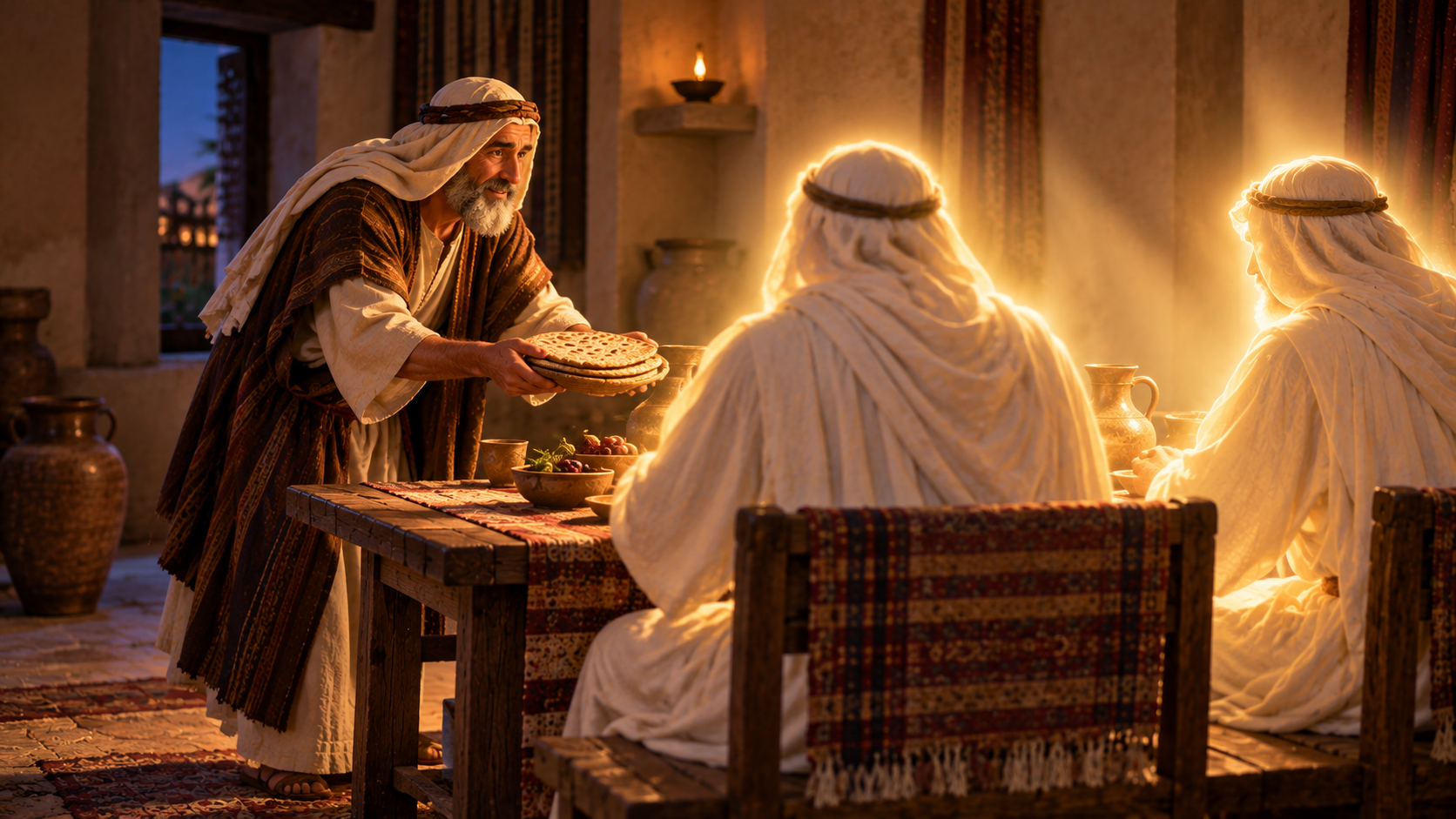
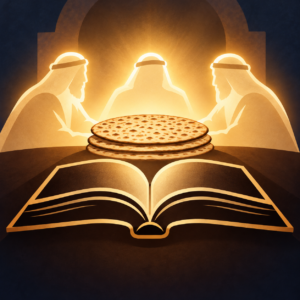
Parshat Vayeira tells the extraordinary story of Lot, the nephew of Avraham Avinu, who was rescued from Sodom shortly before its destruction. Several details of this account raise important questions. Why was Lot appointed a judge on the very day the angels arrived? Why did he insist on welcoming guests despite choosing to live among the wicked people of Sodom? And why did he observe Pesach and specifically serve his guests matzot?
These details become especially significant when we consider that Lot was destined to become an ancestor of David HaMelech and, ultimately, Mashiach.
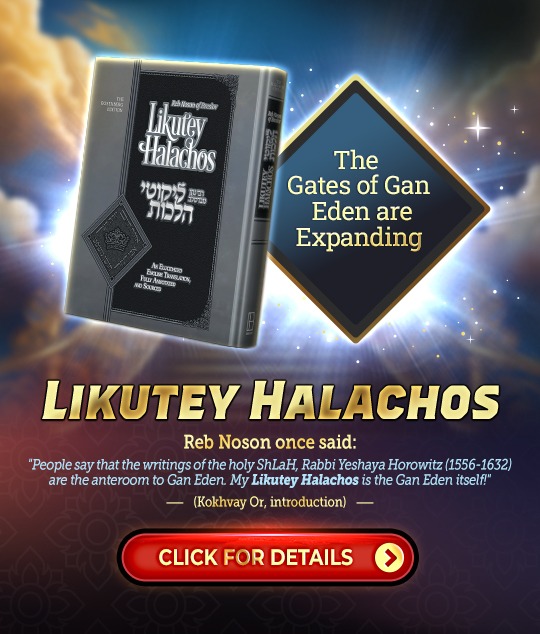
Reb Noson, in Likutey Halachot, Pesach 4, develops the teachings of Rebbe Nachman in Likutey Moharan, Part 2, Lesson 2, concerning the power of thanksgiving and learning Halachah. Through these teachings, we can begin to understand the spiritual preparation necessary for the emergence of David HaMelech and the final rectification of creation.
Adam, David and Mashiach
The name Adam contains a profound hint to the purpose of mankind.
As explained in previous teachings, Adam can be divided into alef and dam, meaning blood. The letter alef represents Hashem and His Infinite Light, while dam represents the blood that sustains human life.
The letters of dam, reversed, also hint to modeh, giving thanks. Man’s purpose is to elevate his life force by recognizing Hashem and expressing gratitude to Him.
However, when Adam and Chava ate from the Tree of Knowledge of Good and Evil, good and evil became spiritually mixed within mankind. The rectification of this damage requires birur Halachah, the clarification of Hashem’s will through practical Torah law.
Halachah determines how Hashem wants a Jew to conduct himself. The mitzvot have specific requirements, whether concerning Tefillin, Tzitzit or any other area of Jewish life. By learning and following those requirements, a person clarifies the good from the mixture created by Adam’s sin.
The Torah expresses this principle through the words “bein dam ledam, bein din ledin”—between blood and blood, between judgment and judgment. The highest authorities must be capable of distinguishing between different legal cases, including the complex laws concerning the five appearances of blood associated with ritual impurity.
Reb Noson explains that this clarification is central to rectifying the spiritual damage associated with the blood of mankind.
But the name Adam contains another remarkable hint.
The Midrash teaches that its three letters represent three figures who bring creation toward its ultimate perfection:
- Alef represents Adam HaRishon.
- Dalet represents David HaMelech.
- Mem represents Mashiach.
From the very beginning of creation, the eventual rectification of the world was connected to David and his descendant Mashiach.
This explains the remarkable tradition that Adam HaRishon, who was originally destined to live for a thousand years, gave seventy of his years to David. David was destined to die at birth, and Adam gave him those years because of his essential role in the rectification of creation.
What made David so important?
David HaMelech: Halachah and Thanksgiving
David HaMelech possessed two exceptional qualities that correspond directly to the foundations of Rebbe Nachman’s teaching: mastery of Halachah and the power of praise and thanksgiving.
The first is hinted to in the expression “Chasdei David”, the kindnesses of David.
The Arizal explains that Shaul HaMelech and David HaMelech represented different approaches to Halachah.
Shaul was inclined toward din, strict judgment. His approach was severe and demanding, both toward himself and in matters of judgment. This excessive strictness contributed to the difficulties of his kingship and ultimately to his mistakes, including his failure to carry out Shmuel’s instruction concerning Agag.
David, by contrast, represented Halachah inclined toward Chesed, compassion.
This does not mean disregarding the law. Halachah has definite rules and requirements, but its application also reflects Hashem’s compassion.
For example, in a capital case, if someone has been found guilty and another person comes forward with an argument that could save his life, the court reconsiders the matter. But if someone has been acquitted, the court does not reopen the case merely because another person presents an argument for conviction.
The law itself favors the possibility of saving a life.
David’s approach reflected this compassionate orientation within Halachah.
A second verse describes him with the words “v’Hashem imo”—Hashem was with him.
When Shaul was suffering from depression and sought someone whose music could bring relief, his advisers recommended David, the son of Yishai. Among the qualities they listed was that Hashem was with him.
The Gemara explains that this meant David’s Halachic rulings accorded with the accepted Halachah. When he expressed a legal opinion, it matched the correct ruling.
David therefore possessed extraordinary clarity in Halachah.
But he was also the author of Tehillim, the greatest expression of praise and thanksgiving in Jewish literature.
Whenever Jews seek words with which to praise Hashem, thank Him or pour out their hearts in prayer, they turn to the Psalms of David HaMelech.
He combined both qualities: hoda’ah, thanksgiving, and the clarification of Halachah.
This combination was essential to his mission.
The Connection Between David and Mashiach
Rebbe Nachman teaches elsewhere that the name Mashiach is connected to mesiach, speaking or conversing.
This hints to the power of prayer and Hitbodedut, through which a person speaks directly to Hashem. Speech will be central to the spiritual power of Mashiach.
But Mashiach is also the anointed king. The oil of anointing, shemen mishchat kodesh, represents Da’at, knowledge and awareness of Hashem.
Da’at has many levels, including the profound teachings of Kabbalah and Chassidut. Yet its highest practical expression is knowing what Hashem actually wants a person to do.
That is Halachah.
A person may possess remarkable spiritual knowledge, but until that knowledge is brought into practical application, it has not reached its final expression.
Mashiach therefore combines the power of speech and prayer with the clarity of Halachah, just as David HaMelech did.
This also explains another detail about David: he was described as admoni, reddish.
The redness of his appearance hints to dam, blood, whose rectification is connected to both thanksgiving and Halachah.
David’s role was to bring these two elements together, preparing the way for Mashiach and the ultimate tikkun of mankind.
Halachah and the Rectification of Creation
Reb Noson emphasizes the extraordinary spiritual power of clarifying Halachah in Likutey Halachot, Pesach 4.
He quotes something he heard directly from Rebbe Nachman (section 3):
“For in truth… halachic rulings… are the primary tikkun for the sin of Adam HaRishon and encompass all the tikkunim for every sin, as I heard from Rebbe Nachman, of blessed memory.”
Reaching a final Halachic ruling requires considerable effort.
The Gemara contains disputes, questions, objections and differing opinions. From Beit Shammai through Abaye and Rava, and onward through the Rishonim and Acharonim, the process of clarification demands careful examination of the arguments until a final ruling emerges.
Reb Noson connects this effort to chametz, leavening. The mind undergoes a difficult process of fermentation, struggling through conflicting possibilities before arriving at clarity.
The final ruling, by contrast, is associated with matzah, which represents Halachah that has already been clarified.
This distinction will become important when we examine what Lot served his guests.
But first we must understand why Lot, of all people, was destined to become the ancestor of David HaMelech.
Why Was Lot Appointed a Judge?
When the angels arrived in Sodom, they came to destroy the wicked cities and rescue Lot and his family.
The angels had delayed, hoping that Avraham’s prayers might uncover sufficient merit to prevent the destruction. But the cities were so corrupt that even ten righteous people could not be found to save them.
The Torah tells us that Lot was sitting at the gate of Sodom when the angels arrived.
Rashi draws attention to the Torah’s wording, explaining that Lot had been appointed a judge that very day.
Sitting is associated with judgment. Just as a judge takes his seat in court, Lot was sitting at the entrance to the city in his new judicial position.
But why does the Torah need to tell us this?
Lot had deliberately chosen to live in Sodom. Rashi explains that he was attracted to the immoral and materialistic environment of the region.
Yet despite his involvement with such a wicked society, he was appointed a judge.
The Midrash describes the cities of the region as having their own judges and identifies Lot as occupying a particularly prominent judicial position over them.
Why would people so determined to violate moral principles bother appointing judges?
Because, as the Midrash indicates, they wanted laws that they could subsequently violate. They needed someone to establish what the law was, even as they sought to undermine it.
Nevertheless, Lot’s appointment meant that he possessed at least some knowledge of law.
Even among the nations, there are legal obligations, including the Seven Noahide Laws. Lot’s position required some ability to understand and administer such laws.
This was significant because he was destined to become an ancestor of David HaMelech.
For David, whose mission would involve the highest levels of Halachic clarification, to emerge from Lot’s descendants, some connection to law had to exist already within Lot himself.
His appointment as a judge was therefore not an incidental detail.
It was part of the preparation for David’s eventual emergence.
The story of Lot teaches us to appreciate the extraordinary importance of Halachah
The Chesed That Lot Learned From Avraham
Another surprising aspect of Lot’s conduct was his determination to welcome the angels into his home.
Although Lot had chosen to live in Sodom, he retained something important from his years with Avraham Avinu: the attribute of Chesed.
Avraham was the embodiment of kindness, especially through hachnasat orchim, welcoming guests and providing them with food and hospitality.
Lot had absorbed this quality.
When he saw the angels, he insisted that they enter his home rather than remain outside.
His determination to protect his guests later became extreme. When the wicked men of Sodom surrounded his house and demanded that the visitors be handed over for immoral purposes, Lot refused and even offered his daughters in their place.
This disturbing offer demonstrates the contradictions within Lot’s character. His sense of hospitality was powerful, yet his moral judgment remained deeply compromised.
The people of Sodom rejected his interference, reminding him that he was a newcomer who had now presumed to judge them. They would accept his authority only when it suited their purposes.
Nevertheless, Lot’s desire to welcome guests reveals the element of Chesed he had retained from Avraham.
And Chesed is essential to David’s approach to Halachah.
David did not merely possess legal knowledge. His rulings were inclined toward compassion, expressing the quality of Chasdei David.
Lot therefore needed both an association with law, reflected in his judgeship, and an element of kindness, reflected in his hospitality.
These qualities prepared the spiritual foundation for the descendant who would eventually emerge from his family.
Why Did Lot Serve Matzot?
The Torah describes Lot’s hospitality:
“Vayiftzar bam me’od, vayasuru elav vayavo’u el beito, vaya’as lahem mishteh, umatzot afah vayochelu.”
Lot urged the angels to enter his home, prepared a meal for them, baked matzot and served them (Genesis 19:3).
Why does the Torah specifically mention matzot?
Rashi explains that the events took place on Pesach.
But Reb Noson’s teaching provides another dimension.
As explained earlier, chametz represents the difficult process of clarifying Halachah. The mind struggles through questions, disagreements and conflicting interpretations until the correct ruling is established.
Matzah represents psak Halachah, the finalized ruling.
The clarification has already been completed. The answer is now available, and a person knows what Hashem wants him to do.
This is precisely the spiritual quality connected to David HaMelech, whose Halachic rulings accorded with the correct decisions.
Lot’s serving of matzot therefore hints to a connection with finalized Halachah.
He may not have been a righteous person, but he possessed certain elements necessary for the emergence of David: some knowledge of law, an attachment to Chesed and a connection to clarified Halachah represented by matzah.
These details help explain why the Torah emphasizes his judgeship, his hospitality and the food he served.
The Birth of David’s Soul
Lot eventually became the ancestor of David through a deeply troubling chain of events.
After the destruction of Sodom, Lot’s elder daughter conceived a child through her father. That child was Moav, whose descendants eventually included Ruth.
Ruth converted and became an ancestor of David HaMelech.
Chazal connect Ruth’s name with the praises that David, her descendant, would express to Hashem. Her name thus hinted to the extraordinary role her family would play in bringing thanksgiving and praise into the world.
But why did such a lofty soul have to emerge through such difficult circumstances?
Rebbe Nachman teaches that the process of birth is closely connected to the spiritual process of clarifying Halachah and emerging from danger.
The Gemara describes the blood gathering and concentrating during childbirth. Rebbe Nachman uses this as an illustration of the pressure that precedes the emergence of new life.
A similar process occurs spiritually when a person faces danger or severe difficulties.
The heart pounds, the blood is pressured and the person experiences distress. Yet Rebbe Nachman explains that such difficulties can accompany the emergence of a new spiritual level.
For someone striving to come closer to Hashem, the suffering may precede a significant advancement, even when the person cannot yet perceive it.
Clarifying Halachah follows a comparable pattern.
The mind struggles through difficult questions and opposing opinions. Only after that pressure does a final ruling emerge.
The completed Halachah is therefore compared to a birth.
Physical childbirth, the emergence of a new spiritual level and the clarification of Halachah all involve a difficult process that precedes a new beginning.
Supporting Torah Scholars and the Pressure of Damim
Rebbe Nachman extends this principle to those who financially support Torah scholars.
The classic example is the partnership of Yissachar and Zevulun.
Yissachar devoted himself to Torah study, producing scholars and leaders of the Sanhedrin, while Zevulun engaged in commerce and helped support that learning.
A person who supports Torah scholars gives away part of his income, leaving himself with less money to meet his own expenses.
The Aramaic word for money is damim, which also means blood.
Thus, the financial pressure experienced by the supporter corresponds to the pressure of blood described in the process of birth.
The supporter experiences a constriction, while the Torah scholar works toward producing new Torah insights.
When those insights emerge, they draw new blessing and abundance into the world, especially benefiting those who supported the scholar’s learning.
Rebbe Nachman describes how the money given away can return with additional blessing, and many times over.
The supporter therefore participates in the process of bringing new Torah into the world, even though his own contribution involves financial difficulty.
This illustrates the larger principle: a new spiritual achievement may require a period of pressure and constriction before its emergence.
Why David Had to Emerge Through Lot
This principle also helps explain the unusual circumstances surrounding the birth of Moav and the eventual emergence of David HaMelech.
David’s soul was destined to play an essential role in the rectification of creation, ultimately preparing the way for Mashiach.
Such a lofty soul could not enter the world without opposition from the Yetzer Hara.
Its emergence therefore required an indirect and difficult process.
Even Adam HaRishon had to contribute seventy years of his own life because David was otherwise destined to die at birth.
The path through Lot and his daughter represented another stage in this difficult spiritual birth.
There is also a tradition mentioned in connection with Lot’s wife, although its precise source requires verification.
According to this account, had Lot’s wife not turned into a pillar of salt, she might have played a role in bringing David’s soul into the world.
Instead, she looked back toward Sodom and was transformed into salt.
Salt itself is connected to blood, because salting meat is part of the Halachic process used to extract its blood.
In this interpretation, her transformation reflected a different form of rectification connected to the blood and corruption of Sodom. By looking back, she lost the opportunity to participate in the rectification associated with Lot’s descendants.
David, described as admoni because of his reddish appearance, would ultimately embody the rectification of blood through both Halachah and thanksgiving.
Even in Lot’s compromised circumstances, the qualities necessary for that future rectification had begun to appear.
The Power of Learning Halachah
The story of Lot teaches us to appreciate the extraordinary importance of Halachah.
We may ordinarily think of Halachah simply as the practical rules governing Jewish life. But Reb Noson explains that its clarification is fundamental to the rectification of creation itself.
Through learning Halachah, we participate in separating the good from the evil introduced by Adam HaRishon’s sin.
Through thanksgiving, we recognize Hashem as the source of that good and reconnect our lives to Him.
Both are necessary, and both work together.
David HaMelech embodied their combination. His Halachic rulings expressed the correct understanding of Hashem’s will, while his Tehillim became the greatest expression of thanksgiving and praise.
And Mashiach, descended from David, will ultimately bring these qualities to their complete fulfillment.
This is why even the unusual details of Lot’s story—his appointment as judge, his hospitality and his serving of matzot—are so significant. They hint at the beginning of a process that would eventually bring David HaMelech into the world.
May we be zocheh to strengthen ourselves in learning Halachah every day and in constantly thanking Hashem for His kindness. Through these two essential practices, may we participate in the rectification of creation and merit the coming of Mashiach, speedily in our days.
Shabbat Shalom.
Meir Elkabas
- 0 comment