The Sages and the Festivals
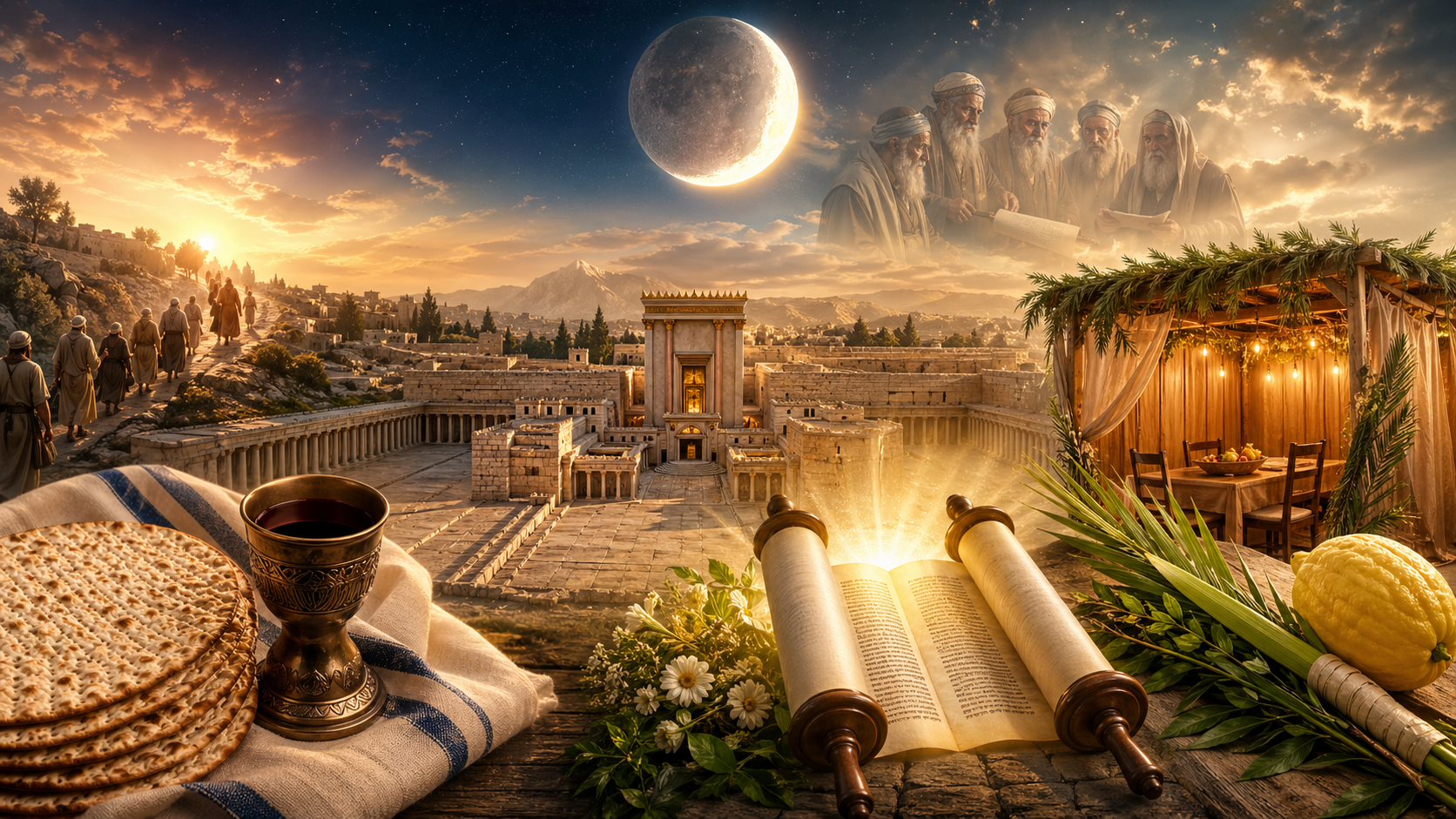
Mo’adei Hashem – The Repetition That Demands Explanation
Parshat Emor introduces the festivals with a phrase that appears three times: “Asher tikre’u otam mikra’ei Kodesh”—that you shall declare them as holy convocations.
At first glance, this repetition seems unnecessary. The Torah already stated the concept—why repeat it again?
Rashi, based on the Gemara, explains that each mention teaches a different halachic function. But beneath the halachah lies a much deeper idea about the nature of time and the role of Am Yisrael.
The First Teaching – Making a Leap Year
The first occurrence teaches the concept of עיבור השנה (ibur haShanah – intercalating the year).
The sages are empowered to add a thirteenth month when necessary, ensuring that the festivals align properly with the seasons. This was especially important so that Jews living in distant lands could travel to Yerushalayim comfortably for the pilgrimage festivals.
The Torah is not only concerned with abstract holiness—it ensures that holiness is accessible.
The Second Teaching – Sanctifying the Month
The second repetition teaches קידוש החודש (Kiddush HaChodesh – sanctifying the new month).
The Beit Din determines when the new month begins, and that decision defines when each festival will occur—Pesach, Shavuot, Sukkot, and even Yom Kippur.
This introduces a remarkable idea: sacred time is not fixed solely in Heaven—it is activated through human declaration.
The Third Teaching – “Otam” Becomes “Atem”
The third teaching carries the deepest message. The word “otam” (them) is written in all three places without a vav, allowing it to be read as “atem” (you) – “Asher tikre’u otam/atem mikra’ei Kodesh”—that you shall declare yourselves as holy convocations
From here, the sages derive that you—the Beit Din—determine the festivals – even in error, whether intentional or not.
This is not merely procedural authority. It is a transfer of responsibility over sacred time itself.
A Challenging Case – Rabbi Yehoshua and Rabban Gamliel
This principle is illustrated by the famous dispute between Rabban Gamliel and Rabbi Yehoshua regarding the correct date of Yom Kippur.
Rabbi Yehoshua’s calculations indicated one day, while Rabban Gamliel ruled another. Despite his certainty, Rabbi Yehoshua was instructed to appear before Rabban Gamliel on the day he personally believed to be Yom Kippur—treating it like an ordinary day.
It was an incredibly difficult test.
Rabbi Akiva explained to him that the Torah itself grants this authority: once the Beit Din establishes the calendar, their decision defines reality—even if it appears mistaken.
Entering the Darkness to Redeem It
To understand how human beings can define sacred time—we must understand the deeper role of the Tzaddikim.
The authority given to the Beit Din is not technical—it is redemptive.
There is a concept in Breslov and Kabbalistic teachings called the “Chamber of Exchanges”—a state of deep confusion and exile, where a person becomes so lost that everything is mixed up. He may not even realize that he is lost.
These are souls trapped in spiritual darkness.
The Tzaddikim have the ability to enter that darkness, shine light within it, and extract those souls. This is a dangerous spiritual mission—entering a place where truth and falsehood are blurred.
And this explains everything.
Just as the moon renews, and just as the festivals elevate, there is always a path back
Why the Sages Can “Make Mistakes”
The Gemara teaches that even if the Beit Din makes an error—whether accidental or intentional—Hashem upholds their ruling.
At first glance, this is shocking.
But in light of what we’ve explained, it makes sense:
When the Tzaddikim enter the “danger zone” of confusion to rescue souls, things can appear distorted. From the outside, it may look like a mistake.
But Hashem says: I am with them.
Because their goal is not calculation—it is redemption.
The Secret of the Leap Year
This idea is hinted at in the concept of a leap year.
The number twelve represents the complete structure of holiness—the twelve tribes of Israel – each tribe representing one of the 12 months. But there are souls who fall outside that structure, who become spiritually disconnected.
These are symbolized by the number thirteen.
By adding a thirteenth month, the Tzaddikim are creating space for those lost souls to return. They expand holiness itself to include those who would otherwise remain outside.
And specifically, this extra month is Adar—a time of joy.
Even those furthest away are given another opportunity to come back.
Sanctifying the Moon—Renewal from Darkness
The same idea applies to Kiddush HaChodesh, the sanctification of the new moon.
The moon reflects the Jewish people—waxing and waning, shining and darkening.
There are moments of fullness and moments of complete concealment.
When witnesses testify that they saw the first sliver of light, the Beit Din declares: Mekudash, mekudash—sanctified.
This is profound.
The Tzaddikim determine when darkness begins to turn into light. They identify the exact moment when a person’s descent begins to transform into ascent.
Even the faintest beginning counts.
Aliyat HaRegel—Lifting the Lowest Places
The festivals themselves are called Aliyat HaRegel—literally, “the elevation of the feet.”
On a deeper level, this means elevating those who are spiritually at the lowest point—the “feet,” closest to impurity.
The entire system of sacred time—months, years, festivals—is structured to uplift those who are stuck in the lowest places and bring them back toward holiness.
And this system is entrusted to the Sages/Tzaddikim.
Sacred Time as Redemption
We can now understand the repetition:
“Asher tikre’u otam… asher tikre’u otam… asher tikre’u otam.”
It is not redundancy—it is emphasis.
The Torah is telling us:
Sacred time is not fixed.
It is shaped, activated, and even expanded by those who dedicate themselves to bringing others back to Hashem.
Even when it looks unclear.
Even when it looks mistaken.
Even when it defies logic.
Because at its core, time itself becomes a vehicle for redemption.
Bringing It Home
Every Jew experiences moments of darkness—personal “Chambers of Exchanges,” where clarity is lost and direction feels impossible.
But just as the moon renews, and just as the festivals elevate, there is always a path back.
Through connection to the Tzaddikim, through mitzvot done with joy, and through the systems Hashem built into creation, even the most distant soul can be reached and restored.
May we merit to connect to those who can guide us through darkness, and to recognize that even confusion itself can be the beginning of renewal.
Shabbat Shalom.
Meir Elkabas
- 0 comment