The Walls of Yocheved
Counting Seventy
Parshat Vayigash contains layers upon layers. The Torah’s recounting of Yaakov and his family descending into Egypt is not just history, it is the beginning of a process that shapes everything that follows. The Torah is precise in its wording, especially in the census that leads to the number seventy.
In chapter 46, verses 26 and 27, the Torah states that sixty-six souls came down with Yaakov to Egypt, excluding the wives. To reach seventy, four additional souls are needed. Two are identified immediately: Ephraim and Menashe, the sons of Yosef who were born in Egypt. That brings the total to sixty-eight. Rashi explains that Yosef himself is counted as number sixty-nine.
So who is number seventy?
Yocheved Between the Walls
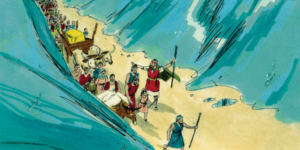
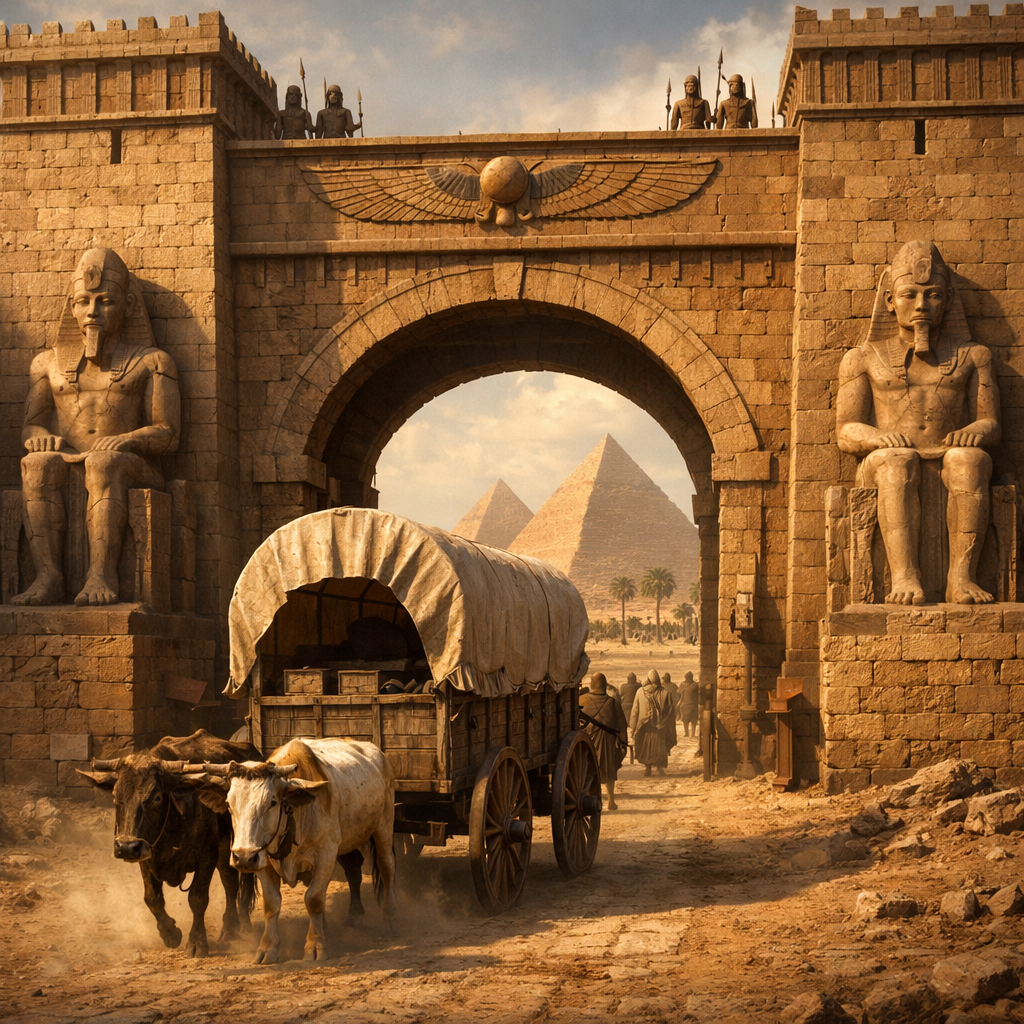
Rashi says the final soul is Yocheved, the future mother of Moshe Rabbeinu. Her status is unique. She was conceived in Eretz Yisrael, but born at the moment the family entered Egypt, bein haChomot, between the walls. The commentaries stress that not for one second was she “born in Egypt.” Her birth took place precisely at the threshold as they passed the border walls.
That makes Yocheved an in-between case. She is not among the sixty-six because she is not yet born. She is not among those born in Egypt like Ephraim and Menashe because she is not born there either. She is conceived in holiness and born at the entry point into exile. Yet she is the one who completes the count of seventy.
The Torah could have omitted this detail. Why does it matter that she was conceived in the Land but born between the walls? What difference does this make, and what lesson are we supposed to learn from it?
The Double Appearance of 130
Yocheved later gives birth to Moshe Rabbeinu at the age of 130. Yaakov was also 130 years old when the family entered Egypt. The number appears twice in a way that does not feel accidental.
The ARI points out another allusion. In the parashah of the Nesi’im, the repeated word mishkala hints to Moshe, because embedded in the word is Moshe together with kuf-lamed, 130. In other words, the Torah is drawing a thread connecting Yaakov’s descent, Yocheved’s boundary-birth, and Moshe’s later emergence as redeemer.
Why Seventy Must Happen Only in Egypt
The Maharal explains that it was important that the Jewish people enter Egypt as individuals and only become “seventy” once inside. Seventy corresponds to the seventy nations. The Jewish people becoming seventy is connected to beginning the rectification of the seventy nations.
For that process to begin, they first enter as distinct individuals, then the number seventy activates once they are already inside Egypt. That is why Hashem was careful that the count not be completed before entry. Sixty-six descend, Yosef and his two sons account for three more, and then Yocheved, born half in and half out, completes the transition.
This is not just arithmetic. It is the start of a national mission.
Egypt as the Beginning of Tikkun
The Arizal teaches that Egypt contained holy sparks trapped there, including sparks linked to Adam HaRishon’s wasted seed during the 130 years between the incident of Kayin and Hevel and the birth of Shet. This is deep material, but the point being made is clear: the descent into Egypt marks the beginning of extracting sparks and rectifying what was damaged from the earliest stages of creation.
So the exile was not merely punishment. It was a process of purification and extraction, a national form of tikkun that could only happen through descent into a place where sparks were trapped.
Why Moshe Needed a Mother Who Was In and Out
The Be’er Mayim Chaim adds that Moshe Rabbeinu, as the redeemer, needed the ability to operate “in and out,” meaning anchored in holiness while functioning within exile. If Moshe were born from a mother fully born in the Land, he would lack the capacity required to redeem from within Egypt.
That is why Yocheved’s status matters. Conceived in the Land, born between the walls, she embodies a boundary state. Her very formation carries the imprint of exile without being fully swallowed by it. That made her the proper vessel to bring into the world the one who would enter Egypt, confront it from within, and take the Jewish people back out.
Mitzrayim as Metzarim and the Chamber of Exchanges
Rebbe Nachman teaches that Egypt is a term for all exile. All exiles are called Mitzrayim, from metzarim, constrictions. Exile is the main power of the evil side over the Jewish people because exile means things are out of place.
Reb Noson connects this directly to the Chamber of Exchanges. Exile is an expression of swapping. A person or a nation is not where it should be. Holiness is displaced, trapped, and mixed into domains where it does not belong, so that it can later be extracted.
This is why a person experiences being thrown into environments that feel upside down, against his will. It is not necessarily punishment or rejection. It can be the setup for extraction. Since nobody willingly chooses darkness, the forces of evil are given room to “swap,” to push a person into confusion, so that he will be forced to pull out hidden strength, break free, and retrieve what belongs to his soul root.
Yocheved being born at the border is the beginning of this entire dynamic on the national level. The first step toward redemption is already embedded in the entry itself.
Egypt, Exile, and the Chamber of Exchanges
With this foundation, the explanation of the Be’er Mayim Chaim becomes clearer. Moshe Rabbeinu, as the redeemer of the Jewish people, needed to emerge from a source that already embodied an in-and-out reality. Egypt represents the Chamber of Exchanges at its most intense level. The Jewish people are not meant to be slaves. We are called bnei melachim, children of the King. Yet in Egypt we were enslaved, bound, constrained, and displaced.
This experience is not limited to Egypt alone. It is the root of every exile and, on a personal level, of every situation in which life feels upside down, frustrating, constricting, and out of place. Exile is when things are not where they belong. That is the essence of the Chamber of Exchanges—when holiness is displaced, swapped, and hidden in places of darkness, requiring extraction.
Moshe Rabbeinu is the one chosen to begin this process of release. Just as Moshe redeemed the Jewish people from Egypt, so too the future redemption will be carried out by Mashiach, whose soul contains the energy of Moshe. The Kabbalistic writings refer to this as Moshe-Mashiach. Mashiach will descend from David HaMelech, yet will also embody the soul-power of Moshe, because redemption requires the same spiritual mechanics—entering exile, confronting it from within, and drawing the people back out together with the remaining sparks.
Redemption begins at the boundary. Growth happens in transition. Light is accessed by learning how to move between the inside and outside with faith and perseverance.
Born In and Out
For Moshe to fulfill this role, his very origin had to reflect this dual state. Yocheved was conceived in the Holy Land, a place of purity and clarity. Yet her birth took place bein haChomot, between the walls, at the threshold of Egypt. This liminal space is neither fully Eretz Yisrael nor fully Egypt. It is a state of transition.
In Kabbalistic terms, this is called matei v’lo matei—reaching and not reaching, entering and withdrawing. This dynamic is essential for accessing the Keter, the gateway to the Infinite Light. Only someone formed through this rhythm of approach and retreat can draw that light down into the world without being consumed by it.
Yocheved’s position prepared her to give birth to Moshe Rabbeinu, who was able to connect to extraordinarily high spiritual levels and transmit that light to the Jewish people. This was revealed on the night of Pesach, when a massive illumination shone upon the nation and enabled them to leave Egypt in an instant.
Yocheved’s Name and the Keter
This dynamic is embedded even in Yocheved’s name. Within her name are the letters yud and vav, which Rebbe Nachman explains correspond to the upper structure of the letter aleph. In its proper form, the aleph consists of an upper yud, a lower yud, and a vav connecting them. The upper yud represents the concealed root of the Keter, while the vav channels that light downward into the world.
The remaining letters of her name relate to kavod, Divine honor. Rebbe Nachman teaches that true kavod begins with the letter kaf, which is also the first letter of Keter. Yocheved’s name thus reflects her role as a vessel for bringing Keter-light into the world through Moshe Rabbeinu.
This aligns with the Midrash cited by Rabbi Akiva, who startled his students by saying that a woman in Egypt gave birth to six hundred thousand people. He was referring to Yocheved. Moshe Rabbeinu was equivalent to the six hundred thousand souls who left Egypt. He contained within him the spiritual capacity to redeem the entire nation, men, women, and children alike.
One Hundred and Thirty Years
Yocheved gave birth to Moshe at the age of 130. This number is not incidental. Adam HaRishon separated from Chava for 130 years following the incident of Kayin and Hevel, during which sparks were damaged and displaced. Those sparks became trapped in Egypt.
Yocheved’s waiting 130 years was part of the rectification of those blemishes. Rebbe Nachman teaches that if one believes damage can be caused, one must also believe that damage can be repaired. The very length of her waiting prepared her to bring forth the soul capable of extracting those sparks and initiating their repair.
According to the Midrash, Yocheved miraculously regained youth in order to give birth to Moshe. This was not merely a physical miracle. It reflected the renewal and restoration required to counteract the damage originating from Adam HaRishon’s separation.
Yosef and the Shield of Holiness
Yosef HaTzaddik represents a different spiritual role. His holiness was so powerful that even though Ephraim and Menashe were born in Egypt, they were shielded by his righteousness. Yet Yosef and his descendants are not the final redeemers. The ultimate redemption comes through Mashiach ben David, combined with the soul-energy of Moshe.
Yosef plays a critical role in preparing the ground, but Moshe represents the actual act of release. This is why Yocheved’s unique formation was necessary. She represents the prototype of a soul sent into difficulty not as punishment, but as preparation for rectification.
Every Jew as Yocheved
Yocheved is not only a historical figure. She represents a spiritual pattern that applies to every Jew. When a person looks at his life and sees confusion, instability, or an upbringing that feels inverted and broken, it does not necessarily indicate failure or rejection. It may indicate assignment.
Some souls are sent into complexity precisely because they are capable of extracting what others cannot. These are Yocheved-type souls, neshamos that must experience in-and-out, concealment and revelation, descent and ascent, in order to activate the Keter and bring kavod back into the world.
Difficulty often signals responsibility, not abandonment.
The Lesson of the Walls
Yocheved’s birth between the walls teaches that redemption begins at the boundary. Growth happens in transition. Light is accessed not by remaining entirely inside or entirely outside, but by learning how to move between the two with faith and perseverance.
Through Yocheved, Moshe Rabbeinu entered the world. Through Moshe, the Jewish people left Egypt. Through this pattern, every Jew is given hope that no matter how disordered life feels, the descent itself is the very mechanism through which rectification is achieved.
May we merit to learn from these tzaddikim, to be strengthened by their teachings, and to extract the holiness entrusted to us, until the complete redemption arrives very soon, Amen.
Shabbat Shalom
Meir Elkabas
- 0 comment