- Faith ⬦ Read ⬦ Redemption ⬦ Shabbat ⬦ Weekly Torah Portion
The Smiting at Midnight

Midnight and the Final Plague
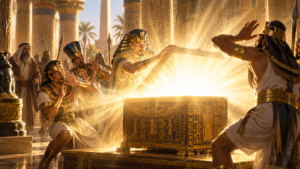
Parshat Bo brings us to the final and decisive stage of the Exodus: the plague of the firstborn. Moshe Rabbeinu confronts Pharaoh for the last time, warning him that Hashem Himself will strike Egypt and smite every firstborn. This moment marks the breaking point of Egyptian power and the beginning of Israel’s redemption.
What stands out in the Torah’s wording is the emphasis on midnight. When Moshe warns Pharaoh, he says the plague will occur kachatzot halayla, “around midnight.” Yet when the event actually takes place, the Torah states clearly that it happened b’chatzi halayla, precisely at midnight. Rashi explains that Moshe deliberately said “around midnight” to avoid giving Pharaoh’s astrologers and sorcerers room to accuse him of inaccuracy. Human calculations are flawed, and Moshe did not want their errors to be turned into claims against Hashem.
Still, this only deepens the question: why midnight at all? Why does the final plague—more severe and decisive than all others—take place specifically at this moment?
Midnight as the Meeting of Opposites
Reb Noson explains that midnight represents a unique spiritual point: the complete joining of opposites. It is the darkest moment of the night, and yet it is also the very beginning of the new day. Dawn may look like transition, but midnight is where darkness and light coexist fully. Externally, nothing changes—everything is still dark. Internally, the light of the new day has already begun.
This paradox makes midnight the greatest test of emunah. One sees nothing, yet believes that something fundamental has shifted. The Zohar teaches that midnight is a time of immense compassion, when the gates of Heaven are open and the Infinite Light begins to shine into the world, even though it is completely concealed.
This is why Chatzot is the ideal time for prayer, Torah learning, and mourning the destruction of the Beit HaMikdash. It is not because clarity is visible, but because faith bridges the gap between what is seen and what is real.
Judgment and Righteousness at the Same Moment
The Midrash connects this idea to a verse from Tehillim: “At midnight I arise to thank You, for the judgments of Your righteousness.” On the surface, mishpat—judgment—and tzedek—righteousness—seem like opposites. Judgment implies strictness, while righteousness implies kindness. Midnight reveals that they are two expressions of the same Divine will.
In Egypt, this truth played out dramatically. At the very same moment, the Egyptians experienced devastating judgment as their firstborn were struck, while the Jewish people were redeemed. For Egypt, it was din; for Israel, it was chesed. Yet both emerged from the same act of Hashem.
This is why King David praises Hashem at midnight—not despite the harshness of judgment, but because he recognizes that even judgment itself is ultimately an expression of Divine compassion and justice combined.
The Beginning of Redemption in the Darkness
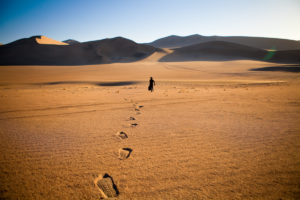
The redemption from Egypt did not begin with visible light. It began in total darkness, at a moment when nothing appeared to change. Yet precisely there, the process of geulah was activated. Pharaoh’s power collapsed from within, and the Jewish people were set on an irreversible path toward freedom.
Midnight teaches a foundational lesson of faith: redemption does not begin when circumstances improve. It begins when darkness and light are unified through emunah. This principle, rooted in the plague of the firstborn, continues to guide every personal and national redemption that follows.
Even when everything appears dark, one can believe that the light is already present
Turning Mishpat into Tzedek
Reb Noson explains that the secret of midnight is not limited to Egypt—it is the pattern of life itself. A person experiences setbacks, suffering, and moments that feel like punishment. From the outside, it appears as mishpat, harsh judgment. One feels, “Hashem is making me suffer.” But when a person responds with emunah, bitachon, and simcha, the entire picture changes. Trusting that Hashem is good, that He created the world to bestow goodness, and that everything ultimately serves Divine benevolence transforms mishpat into tzedek.
This inner shift is the work of midnight. Midnight represents the merging of din and rachamim. The first half of the night is dominated by judgment, while the second half is governed by compassion. Ideally, a person withdraws during the hours of judgment and reengages with life after midnight, when rachamim becomes dominant. Midnight is when darkness still appears absolute, yet in truth the greatest light has already begun to shine.
Reb Noson teaches that this moment is such an et ratzon that the Infinite Light is revealed then, even though it remains concealed. Rebbe Nachman adds that the power of midnight extends for two hours, corresponding to the middle mishmar, the central watch of angels described in the Gemara. Those who attune themselves to this time develop the ability to see past surface darkness and recognize the hidden light within difficulty.
Why the Firstborn Were Struck at Midnight
The plague of the firstborn reveals this principle in action. Rashi, citing Midrash Tanchuma, explains that the ten plagues followed the logic of warfare. First, infrastructure is dismantled—water, food, safety. But the true collapse of an enemy occurs only when its leaders and most significant figures are struck. The firstborn represent the strength, continuity, and future of Egypt. When they were smitten, Egypt’s downfall truly began.
This decisive blow took place at midnight because midnight is the point where opposites converge. For Egypt, it was total judgment. For the Jewish people, it was the beginning of redemption. Pharaoh could endure discomfort and chaos, but once the core of his power was broken, he surrendered completely. Only then did he beg the Jews to leave and even asked for their blessing.
Darkness as the Gateway to the Infinite Light
Midnight teaches a practical spiritual lesson. When a person encounters darkness and interprets it as rejection or failure, the darkness deepens. But when one understands setbacks as preparation, the darkness itself becomes the gateway to the Infinite Light. This is how enemies—external or internal—are defeated. The real test is not the difficulty itself, but the response.
Holding onto simcha during hardship turns concealment into revelation. What appears as collapse becomes the foundation for growth. This is how the Jewish people overcame Egypt, and this is how every individual leaves their own personal exile.
The Secret of “KaChatzot”
This also explains why Moshe Rabbeinu used the word KaChatzot. On the surface, the letter kaf implies approximation, protecting against human error. But in Kabbalah, the letter kaf alludes to the Keter—the gateway between darkness and Infinite Light. Moshe was not merely estimating time; he was activating the spiritual point of midnight itself.
The Midrash teaches that Moshe chose midnight, and Hashem agreed. Moshe understood the power of that moment—the unification of mishpat and tzedek—and invoked it through kachatzot. When Hashem Himself carried out the plague, the Torah no longer used approximation. It states plainly, vayehi b’chatzi halayla—it was midnight itself.
Moshe invoked the gateway; Hashem revealed the reality.
Living with the Light of Midnight
King David captures this truth when he says, “At midnight I rise to thank You for the judgments of Your righteousness.” The difficulties a person experiences are not contradictions to goodness—they are contained within it. Mishpat exists inside tzedek, not outside it. Judgment is a preparation, not the final word.
Midnight teaches a way of seeing life. Even when everything appears dark, one can believe that the greatest light is already present. Through emunah, simcha, and trust in Hashem’s goodness, a person transforms suffering into redemption.
May we merit to carry the light of midnight into our lives, to see past concealment, and to recognize that even the darkest moments are openings for Infinite Light.
Shabbat Shalom u’Mevorach
Meir Elkabas
- 0 comment