The Iffy Attitude of the Omer Offering

The “If” That Isn’t Optional
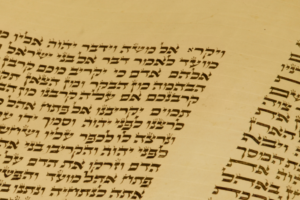
Parshat Vayikra opens with a series of voluntary offerings, each introduced with the word “Ve’im”—“and if.” These korbanot nedavah are optional, expressions of a person’s desire to draw close to Hashem. However, when the Torah reaches the offering of the Omer, something shifts. The verse again says “Ve’im takriv,” but Rashi points out that here it cannot mean “if.” Instead, it takes on the meaning of “when.” This is no longer optional—it is a חובה, an obligation. The Torah uses the same language, but the meaning is fundamentally different. The Omer offering is not a choice; it is a necessary step in the spiritual process from Pesach to Shavuot.
The Omer Offering and Its Unique Nature
The Omer offering, brought on the second night of Pesach, stands apart from all other meal offerings. While most offerings are made from refined wheat flour, the Omer is brought from barley—a grain associated more with animal consumption than with human food. This immediately signals that the Omer represents a lower, more basic level. Its preparation was done with great public excitement, as described in the Mishnah, emphasizing its central role in initiating the Sefirat HaOmer.
From that very night, the counting begins. For forty-nine days, we count each day “to the Omer,” linking every step forward to this initial offering. This leads directly to Shavuot, the fiftieth day, when the Torah was given and the Jewish people accessed the highest level of Divine revelation—the אור אין סוף, the Infinite Light.
Counting Backwards Toward the Goal
At first glance, the structure of Sefirat HaOmer seems counterintuitive. If the goal is Shavuot, the giving of the Torah and the experience of Keter, then the counting should be directed forward—toward that culmination. Yet the language of the mitzvah frames it differently: we count “to the Omer,” as if constantly looking back to the starting point rather than forward to the destination.
This reveals a deeper principle. The process is not simply about reaching a lofty spiritual peak. Rather, it is about building a vessel capable of receiving that light. The Omer, rooted in barley and representing a more basic level, serves as the foundation. Every day of counting is a refinement of that starting point, transforming something coarse into something capable of receiving the highest levels of holiness.
The Light of Pesach and Its Withdrawal
This dynamic is already hinted at in the experience of Pesach itself. On the first night of Pesach, every Jew is granted access to an extraordinary level of light—far beyond what they have earned. It is a gift, a temporary illumination that provides a glimpse of what is possible. However, this light does not remain. By the next day, it begins to fade, and by the second night it is gone entirely.
This withdrawal is not a loss but a necessary stage. The initial light of Pesach is a preview, not a permanent state. It awakens a person to higher possibilities, but it must then be followed by a process of עבודה—of effort, refinement, and growth. That process is the Sefirah, beginning with the Omer offering.
Building Toward the Keter
Shavuot represents the level of Keter—the crown, the gateway to the Infinite Light. At Har Sinai, the Jewish people experienced this level so intensely that their souls could not contain it. The Midrash describes how their neshamot left their bodies upon hearing the Divine voice, only to be returned by Hashem.
Each year, this experience is renewed according to a person’s level. The light of Shavuot is available, but it depends on the preparation of the preceding days. The counting of the Omer is not merely a passage of time—it is the gradual construction of the vessel needed to receive that light.
Why the Process Begins with “When”
This is why the Torah shifts from “if” to “when” in describing the Omer offering. Unlike voluntary offerings, which depend on a person’s initiative, this process is essential. Every Jew must pass through it. The journey from the initial, animal-like level of barley to the refined reception of the Torah is not optional—it is built into the structure of spiritual growth itself.
The Omer marks the beginning of that journey. By anchoring the count to this starting point, the Torah teaches that true elevation does not come from leaping directly to higher levels, but from working through the stages of refinement, beginning with where one actually is.
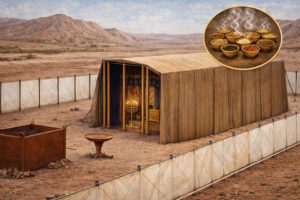
Through the power of the Ketoret, holiness continually reclaims what has been taken from it
The “If” That Feels Like Uncertainty
The Torah’s use of “Ve’im” in describing the Omer offering now takes on a deeper meaning. Even though Rashi explains that it really means “when”—an obligation—the Torah deliberately writes it in a way that sounds optional and uncertain. This reflects the inner experience of a person during Sefirat HaOmer. Although the process is structured, it feels anything but clear. A person feels confused, unsure, and even as if he is going backwards rather than progressing.
This is not a mistake in perception—it is the design of the process itself.
Setbacks as the Gateway to Light
Rebbe Nachman, in Likutey Moharan Lesson 24, teaches that the only way for a person to receive the Infinite Light is through setbacks. When a person is striving to grow, to come closer to Hashem, he inevitably encounters obstacles, confusion, and frustration. These moments feel like failure, but in reality they are the כלי—the vessel—through which the light is received.
A finite being cannot directly contain infinite light. There must be a contraction, a pushback, a state where the person feels disoriented. Specifically in that situation, when a person feels shaken and unsure, Hashem is sending him the very light he needs. The challenge is to maintain even a minimal level of emunah—to not give up, even when everything feels like it is falling apart.
Why We Count Back to the Omer
This explains the unusual structure of the counting. We do not count forward toward Shavuot; we count backward “to the Omer.” The Omer, made of barley—animal food—represents the האדם במצבו הנמוך, when a person feels coarse, confused, and lacking clarity. By counting toward the Omer, a person is acknowledging his current state: “This is where I am. I feel like I’m not advancing.”
And yet, that very feeling is the beginning of true growth.
Each day of the count is not a step away from the Omer, but a deeper engagement with it. A person learns to work through confusion, to continue despite feeling stuck, and to transform that low place into a vessel for something higher. The counting “backwards” is actually the way forward.
The Illusion of “If” and the Reality of “When”
This resolves the question of why the Torah uses the word “Ve’im” instead of simply saying “when.” The experience of the person is one of “if”—maybe I’m progressing, maybe I’m not, maybe this is working, maybe it isn’t. Life feels uncertain and unstable.
But the Torah reveals the deeper truth: it is not “if,” it is “when.” The process is definite. Growth is happening, even if it is not visible. The person may feel lost, but he is being led.
The Torah deliberately preserves the language of confusion to mirror the human experience, while Rashi uncovers the underlying certainty.
Preparing for Shavuot Through Confusion
The goal of Sefirat HaOmer is to internalize the light first revealed on Pesach and to prepare for the revelation of Shavuot—the level of Keter. But this preparation cannot come through clarity alone. It must pass through a stage where a person feels like he has no דעת, no understanding.
This is the paradox: the closer a person gets to a breakthrough, the more it can feel like everything is unraveling. The setbacks, the doubts, the sense of going backwards—all of this is part of the preparation.
Living the Process
The message is practical and immediate. When a person feels that his efforts are not working, that his prayers are unanswered, that his progress is slipping away, he is standing exactly where he needs to be. The עבודה – devotion – at that point is not to escape the confusion, but to continue within it—with emunah, with patience, and with persistence.
The “Ve’im” may feel real, but the truth is “Vechi”—when. The process is unfolding exactly as planned.
Shabbat Shalom and Chodesh Tov, and may these ideas be internalized and lived in our daily lives.
Meir Elkabas
- 0 comment